
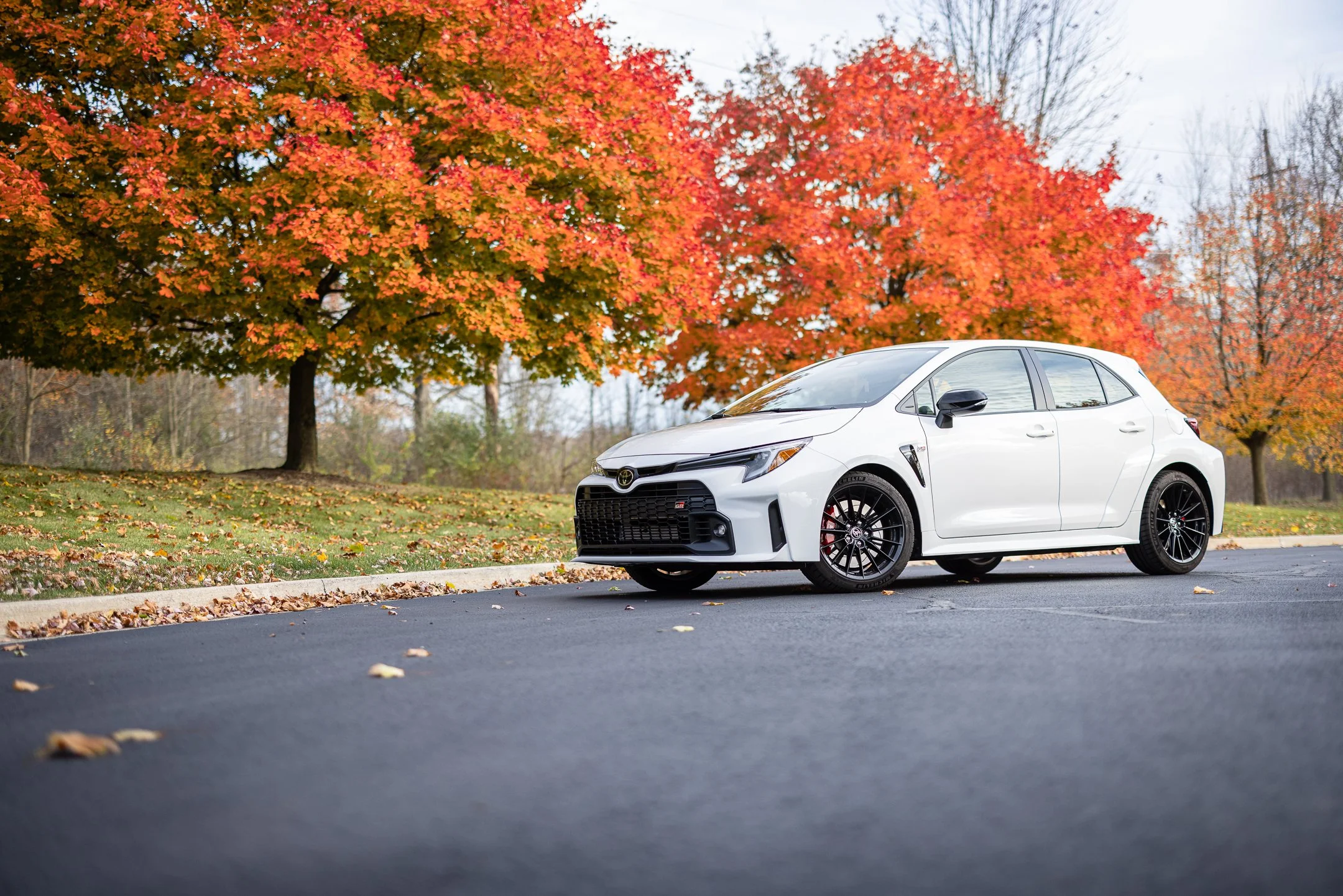
After spending some time getting familiar with the GR Corolla on the street, it was finally time to take it to the track and see what it could do.
Having spent years driving and competing in my Scion FR-S, I was particularly interested in how the two cars would compare. The GR Corolla offered significantly more power, turbocharging, and an all-wheel-drive system. On paper, it certainly had the ingredients to be a capable track car.
I also had aspirations of eventually competing with the GRC in GridLife's ClubTR class, so this was an opportunity to see whether the car could live up to those expectations.
Unfortunately, my first track experience at Gingerman Raceway in Michigan left me with mixed feelings.
Surprisingly Easy to Drive
My first impression was just how easy the GR Corolla was to drive quickly.
In fact, I'd argue that it was even easier to drive than the FR-S.
The FR-S was always a wonderfully balanced and communicative chassis, but being rear-wheel drive, it demanded a certain level of precision from the driver. Weight transfer, throttle application, and steering inputs all had a noticeable influence on the car's behavior.
The GRC was considerably more forgiving.
The all-wheel-drive system made putting power down on corner exit relatively effortless. You could be more aggressive with throttle application without having to worry nearly as much about upsetting the car.
For someone new to track driving, I think the GRC would be an excellent platform. It's predictable, forgiving, and inspires confidence.
And I don't mean that in a negative way. A car that allows you to build confidence without immediately punishing small mistakes is a good thing.
But there's an interesting distinction between a car that's easy to drive quickly and one that teaches you how to drive quickly.
The FR-S was particularly good at the latter.
Braking and Handling
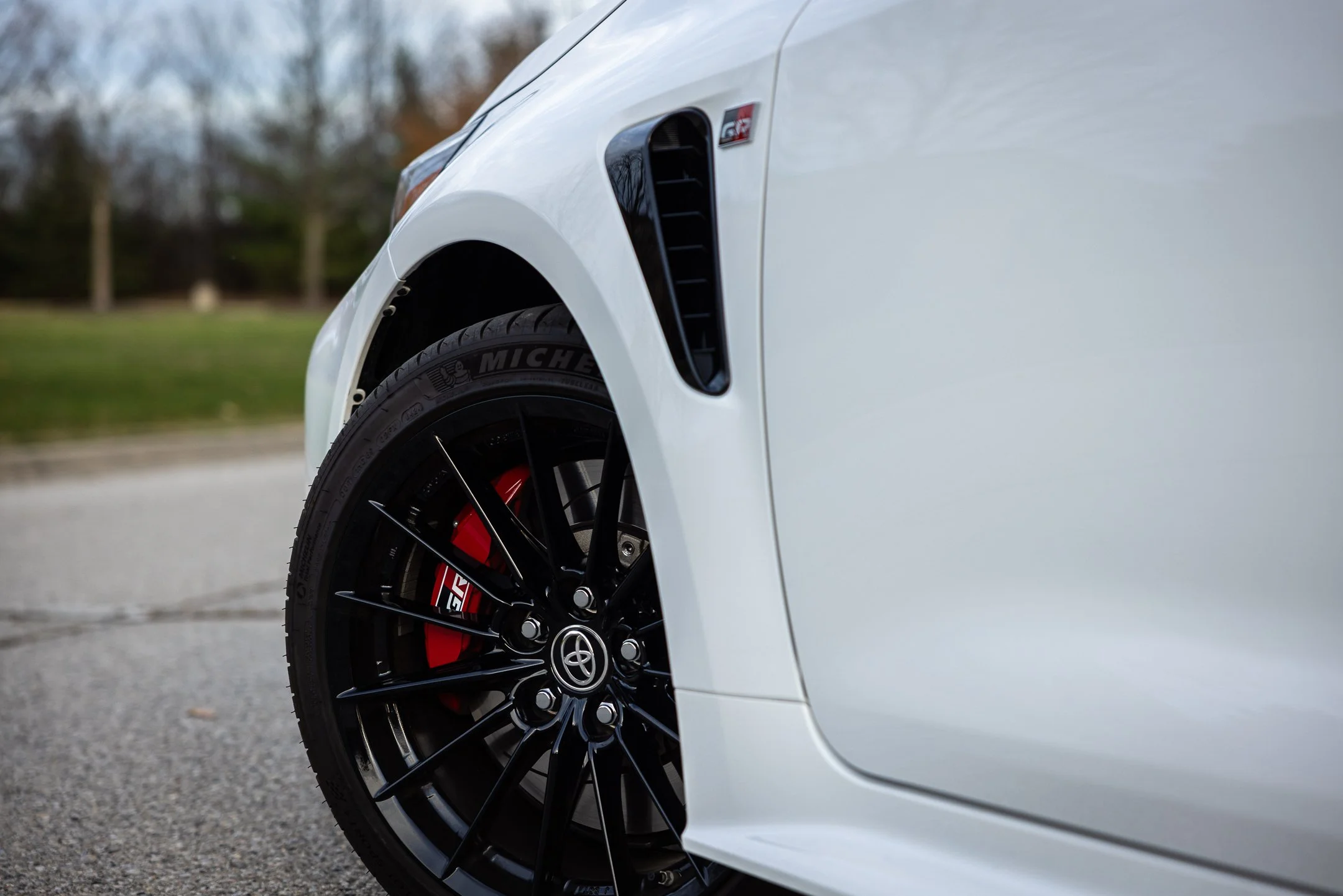
14.0-inch ventilated, slotted rotors; 4-piston fixed calipers
Braking performance was decent, with reasonable pedal modulation. Nothing particularly objectionable, although nothing that really stood out either.
Compared to the FR-S, the GRC didn't offer quite the same level of feedback and communication. The steering felt more isolated, and the overall experience was less engaging.
That's not to say the GRC handled poorly. Quite the opposite. It was remarkably easy to manage, and the chassis felt forgiving.
But I found myself missing some of the directness and feedback that made the FR-S so enjoyable.
Still, these were relatively minor criticisms compared to what came next.
The Biggest Disappointment: AWD Overheating
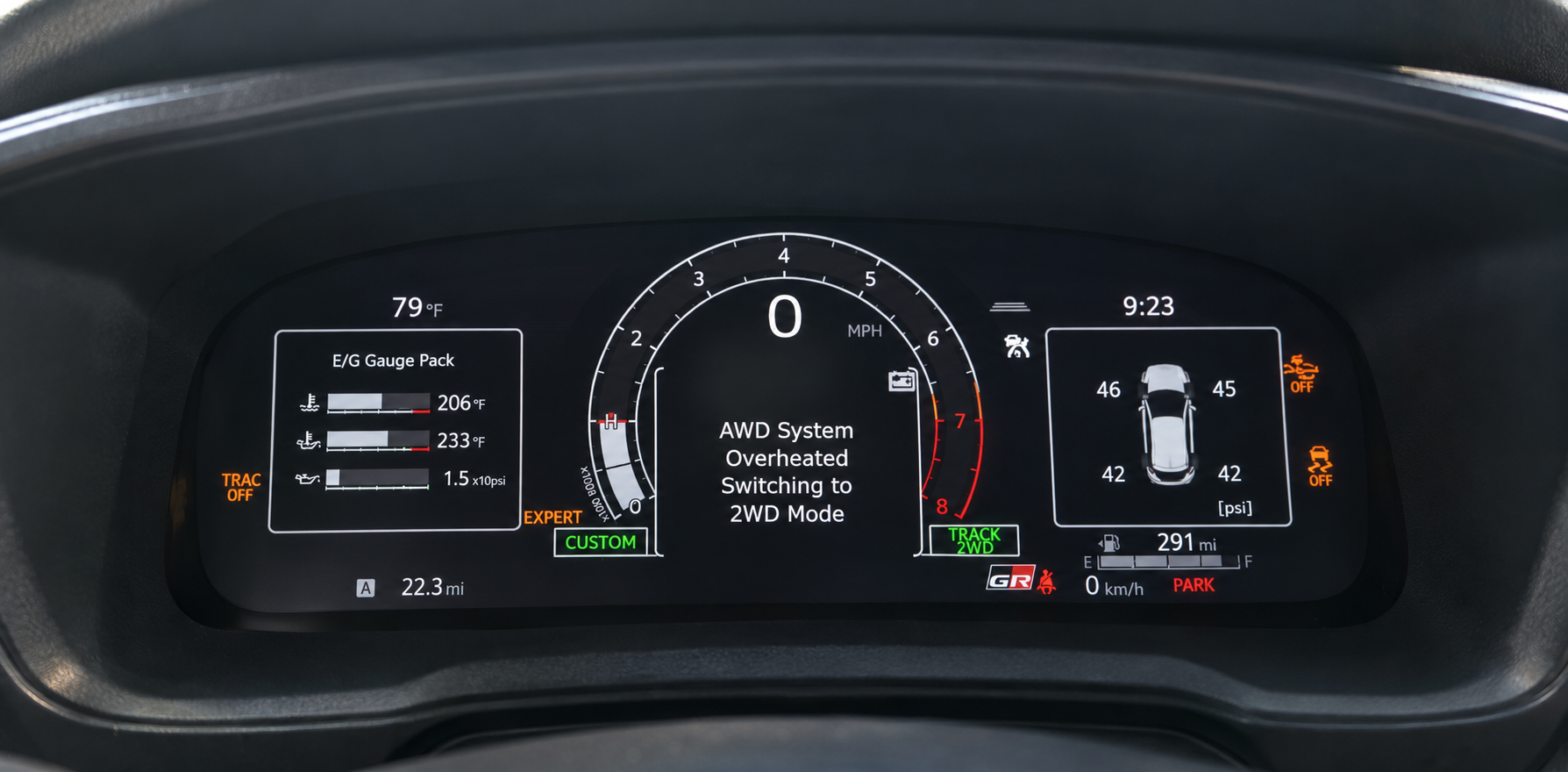
The dreaded “AWD System Overheated Switching to 2WD Mode”
Unfortunately, the biggest disappointment came partway through my session at Gingerman Raceway.
It wasn't an exceptionally hot day. If I remember correctly, ambient temperatures were somewhere around 70–80°F. Pretty typical Michigan summer weather.
I had the GR Corolla in Track mode, with its nominal 30:70 front-to-rear torque distribution, and was gradually working up my pace. Nothing particularly aggressive. I was still getting familiar with the car.
Then, after approximately four or five laps, the dreaded message appeared on the dashboard:
"AWD System Overheated. Switching to 2WD Mode."
Seriously?
Just like that, my all-wheel-drive GR Corolla had effectively become a front-wheel-drive Corolla.
The system was entering a thermal protection mode, disengaging drive to the rear wheels to protect the drivetrain from excessive temperatures.
I understand the engineering rationale behind protecting components from thermal damage. But from the perspective of someone who purchased the car specifically with track driving in mind, this was incredibly disappointing.
What bothered me most was that I wasn't even pushing particularly hard. I was still working up to the car's limits when the drivetrain reached its own.
When the warning first appeared, I returned to the pits to let everything cool down. I figured I'd give the car some time to recover and head back out.
Unfortunately, that wasn't the end of it.
For the remainder of the day, I found myself having to manage the AWD system's temperature. I'd drive several easier laps to keep things under control, get in a couple of push laps, and then back off again before the system overheated.
Essentially, the car was dictating how hard and how long I could drive.
And that was perhaps the most frustrating part of the experience. Instead of focusing on improving my driving, experimenting with different lines, braking points, or simply enjoying the car, I was constantly thinking about how many laps I could get in before the AWD system would give up.
And I couldn't help but compare the experience to my old FR-S.
That car, in completely stock form, provided essentially endless track time without complaint. I could spend entire sessions driving it hard, lap after lap, and it just kept going.
No overheating drivetrain. No electronic system deciding it had enough. Just drive, come back into the pits, and head back out again.
The GR Corolla couldn't do that.
For me, that's a pretty fundamental shortcoming in a performance car.
The Aftermarket Solution
Of course, the aftermarket had solutions to address the problem.
One approach involved replacing the factory AWD controller with an aftermarket unit, such as the Syvecs controller, which offered greater control over the AWD system and its thermal protection strategy.
Additional cooling, including aftermarket transfer case cooling solutions, was another way to address the thermal limitations rather than simply changing how the system responded to them.
But now we're talking about potentially spending another $3,000–$4,000 to get the car to reliably do something I expected it to do from the factory.
And frankly, I wasn't particularly interested in doing that.
I'm certainly no stranger to modifying cars for track use. I've spent plenty of time and money improving the FR-S over the years.
But there's a difference between modifying a car to make it faster and modifying a car just so it can complete a track session.
I was willing to invest in the former. Not particularly excited about the latter.
Final Thoughts
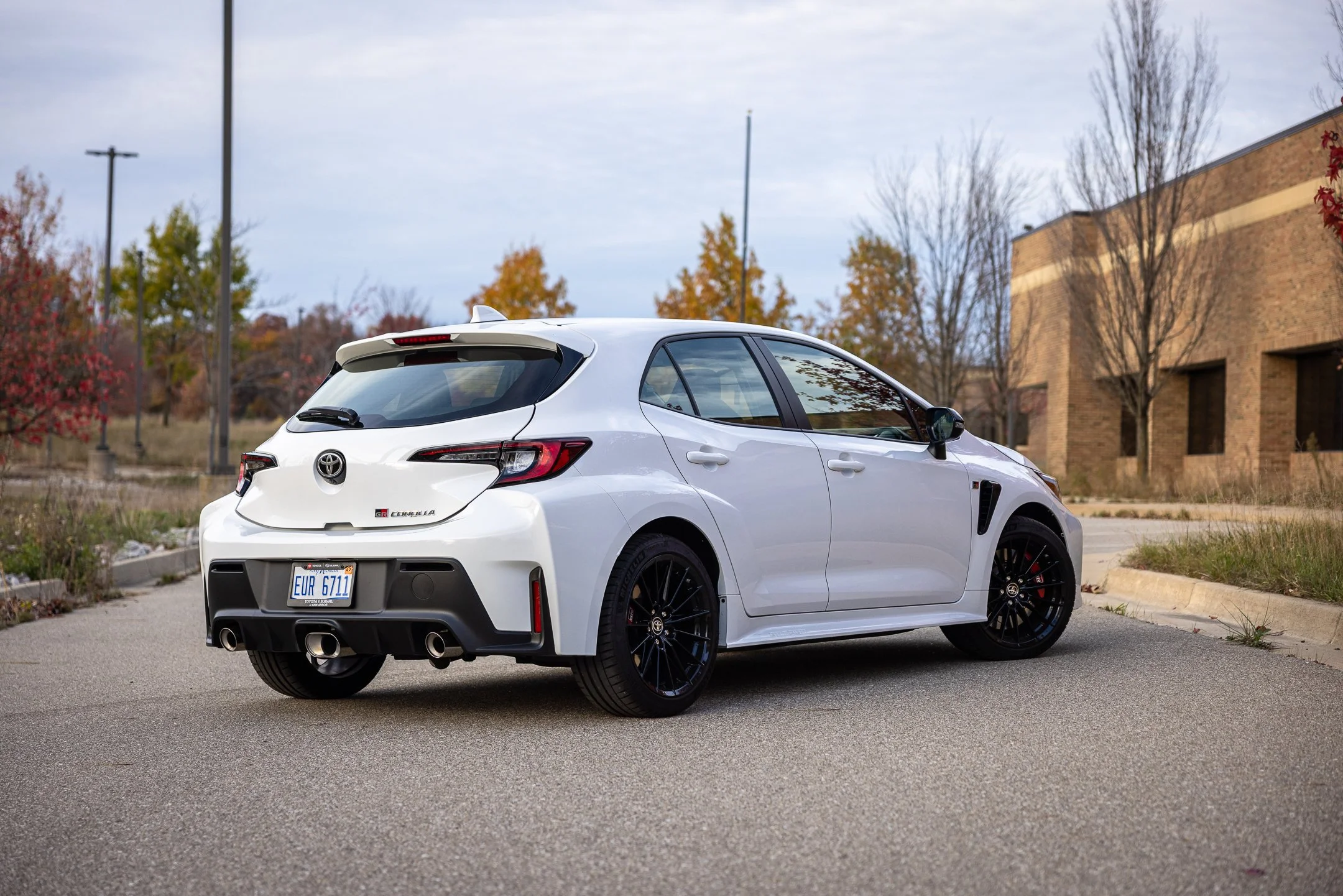
My first track experience with the GR Corolla left me with mixed feelings.
On one hand, it was remarkably easy to drive. The combination of turbocharged power, all-wheel drive, and a forgiving chassis made it an approachable and confidence-inspiring car. I could certainly see why someone new to track driving would enjoy it.
But the AWD overheating issue was a huge disappointment.
Perhaps what made the experience most disappointing was having my old FR-S as a reference. It was slower, less powerful, and considerably less sophisticated, but in stock form it would happily run lap after lap without complaint.
And for someone who values seat time and driver development, that reliability is worth a lot.
I had originally envisioned the GR Corolla as a potential platform for competing in GridLife's ClubTR class. After my experience at Gingerman, I was seriously questioning whether I wanted to pursue that ambition.
The GR Corolla was certainly capable of delivering an enjoyable few laps.
I just wished it would let me keep driving.