
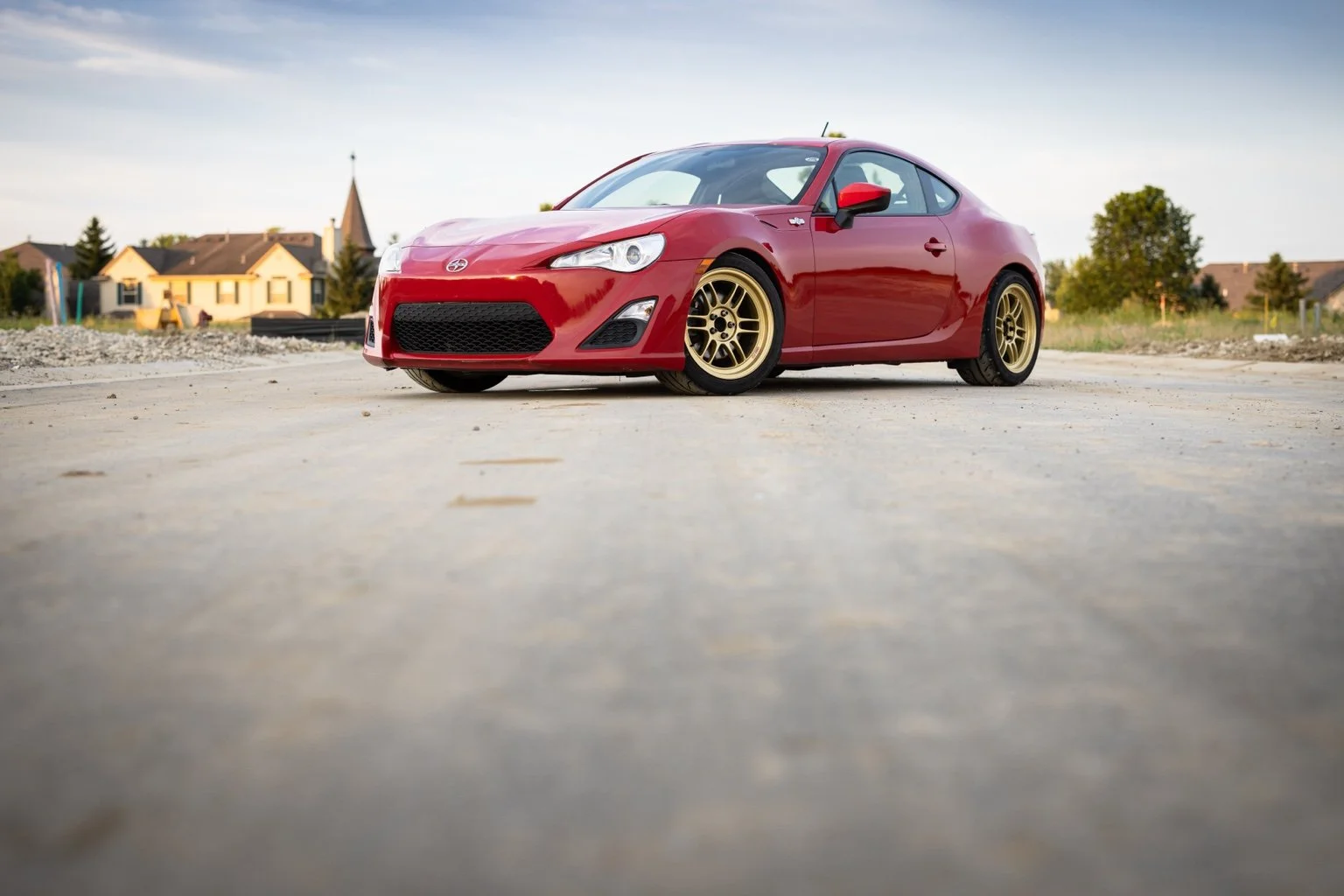
My 2013 Scion FR-S, photographed near the end of nearly six years of ownership. – Image by PB Photo
After nearly six years of ownership, it was time to say goodbye to my 2013 Scion FR-S and pass it on to its next owner.
I purchased the car in October 2018, and over the years, it had become an important part of my journey in high-performance driving. With more than 50 track days under its belt, countless laps, and plenty of lessons learned along the way, the FR-S had served me exceptionally well.
But with a new car already in the garage, and my needs having changed over the years, I decided it was time to move on.
On August 10, 2024, I officially said goodbye to the FR-S.
Why I Chose the FR-S
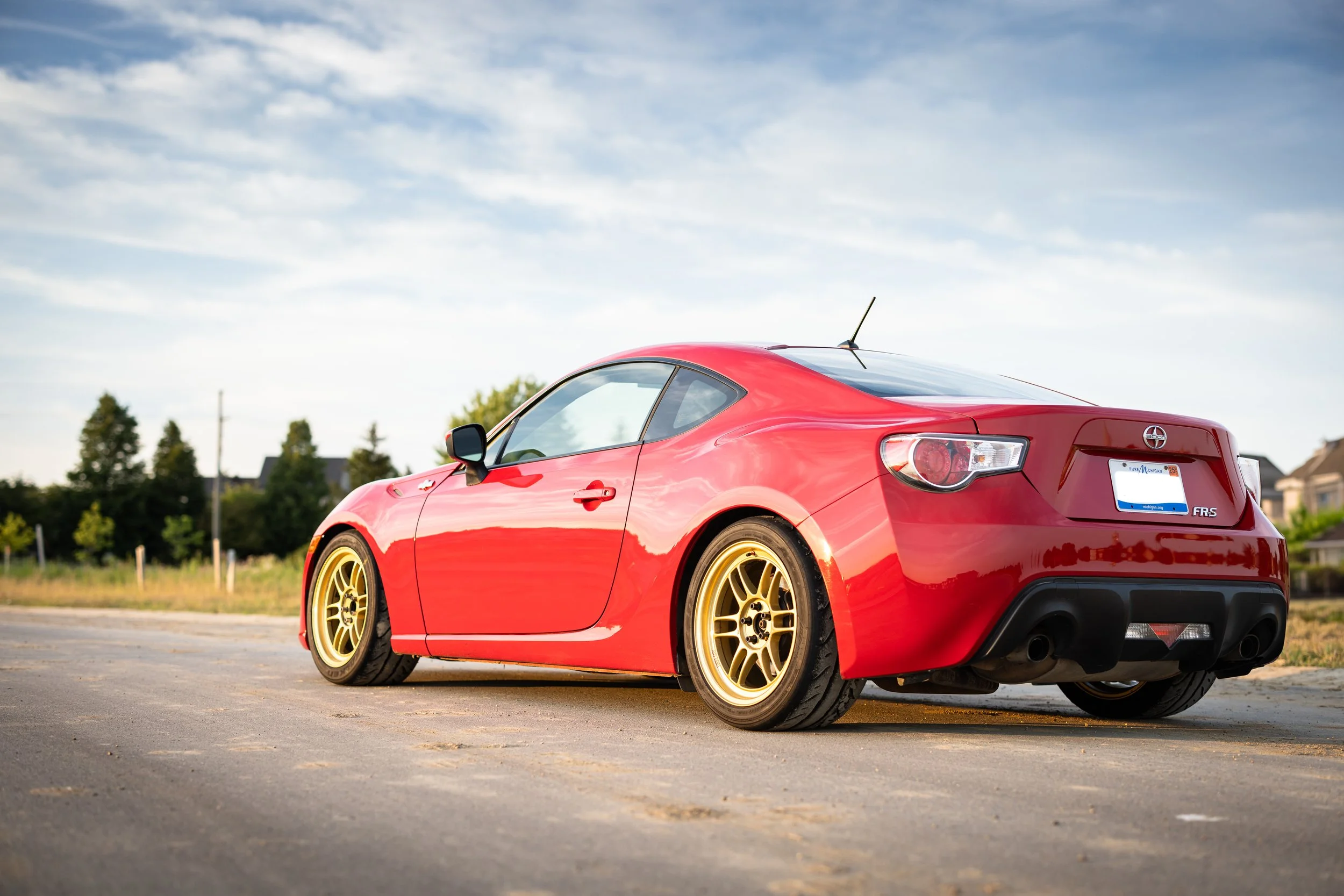
Sunsetting on my ownership. - Image by PB Photo
When I originally started looking for a car to take to the track, the answer seemed to always be the same: Mazda Miata.
And for good reason. The Miata had long established itself as one of the best platforms for learning high-performance driving. It was lightweight, relatively inexpensive to operate, had excellent handling characteristics, and benefited from an enormous aftermarket.
But I wanted something that checked many of those same boxes while offering a little more practicality.
I wanted a car I could drive to the track, spend the day lapping, and drive home without needing a trailer or support vehicle. Ideally, I wanted enough room to carry a complete set of wheels and tires, tools, and the other essentials that come with a typical track day.
That led me to the first-generation Toyota 86/Subaru BRZ platform, known by its chassis codes, ZN6/ZC6.
The FR-S offered nearly everything I was looking for. It was lightweight, had a low center of gravity, excellent chassis dynamics, and a relatively simple rear-wheel-drive layout. It also had a surprisingly practical interior, particularly with the rear seats folded down.
Most importantly, it was already a well-established track-day platform with plenty of aftermarket support and a large community of enthusiasts.
It seemed like the right tool for the job.
And as it turned out, it was.
A Car That Taught Me to be a better driver
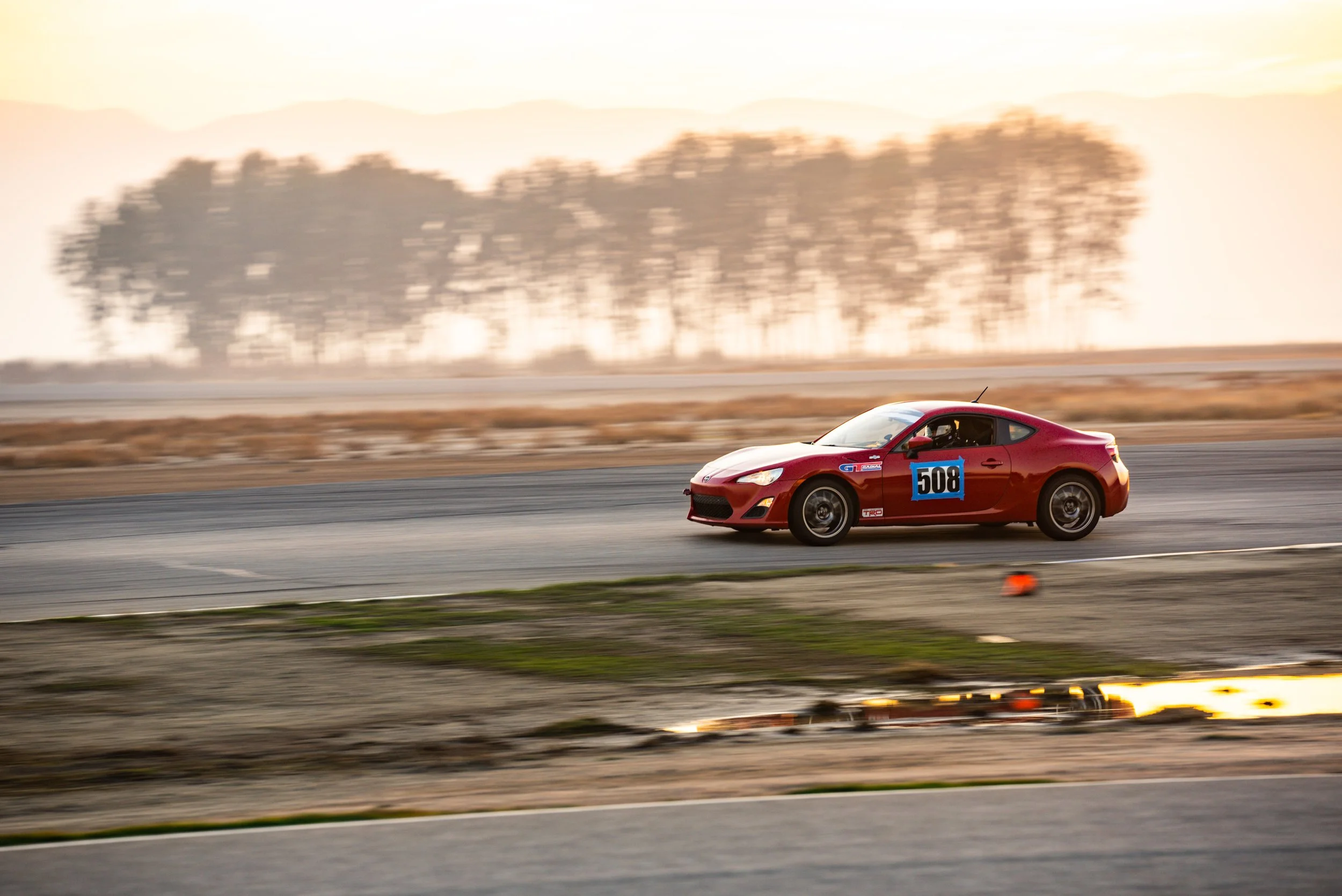
Learning to carry speed and balance the FR-S at Buttonwillow Raceway - Image by Kevin Natividad @ Feend Media.
To say I was happy with the FR-S would be an understatement.
Of all the cars I've driven, the FR-S stands out as one of those genuinely rewarding driver's cars. Not because it was particularly fast in a straight line, but because of how it responded to driver inputs and how clearly it communicated what was happening underneath you.
For the first several years, I drove the car largely in stock form, focusing primarily on improving my driving rather than modifying the car.
And I think that was one of the best decisions I made.
With its relatively modest power output, the FR-S didn't have the horsepower to mask mistakes. If you entered a corner too slowly or compromised your exit, there wasn't enough power to simply make up for the lost time on the following straight.
You had to learn how to carry speed.
That meant focusing on braking technique, corner entry, maintaining momentum, and understanding how to manage the car's balance throughout a corner.
It rewarded smoothness, precision, and consistency.
And as I became more comfortable with the car, I began to appreciate just how much performance could be extracted from a relatively simple platform.
The FR-S was forgiving enough to learn with, but it also had enough depth that there was always something left to improve.
That is something I value tremendously in a driver's car.
Keeping Things Simple
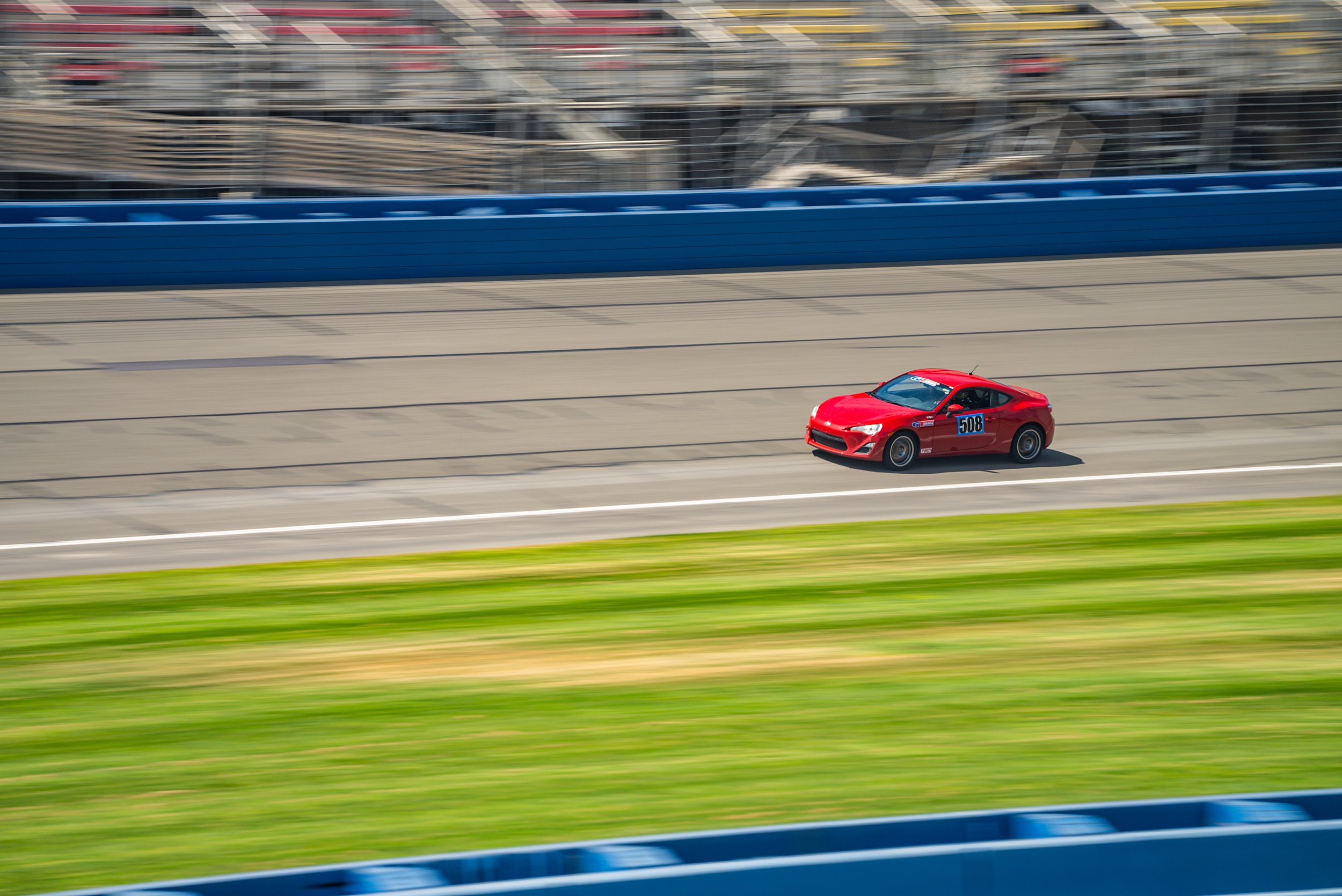
A simple setup, with the focus on improving the driver. - Image by Kevin Natividad @ Feend Media.
One of the things I'm most pleased about when looking back at my ownership is how little I actually modified the FR-S.
It was never intended to be a dedicated track build. My focus was always on developing my driving rather than relying on modifications to make the car faster.
It wasn't until the start of the 2022 season, when I decided to become more competitive in time attack, that I finally upgraded the factory suspension to Racecomp Engineering SS1 coilovers.
By then, the grip levels and cornering forces I was achieving had begun to exceed the capabilities of the stock suspension. Under hard braking and cornering, I was frequently getting into the bump stops, having exhausted much of the available suspension travel.
In March 2022, I also converted the car to run on E85. At the time, E85 was cheaper than 91-octane gasoline in California, making it an attractive option given how frequently I drove on track. The other motivation was to help maintain the engine's modest power output in hot conditions, taking advantage of E85's higher knock resistance and charge-cooling characteristics.
Otherwise, the engine remained completely stock.
Stock intake, stock headers, stock exhaust, and stock internals.
Other modifications were primarily focused on reliability and supporting regular track use. An external oil cooler helped manage oil temperatures, while adjustable rear lower control arms provided additional camber adjustment. Wheels, tires, and brake pads were selected to withstand the demands of repeated track sessions.
And that was essentially it.
Even when I began competing more seriously, I never felt compelled to modify the car to the limits of what the competition rules allowed.
There was undoubtedly more performance available through additional modifications, but that was never really the point.
I wanted to see how much I could accomplish with a relatively simple car, and how much more I could continue improving as a driver.
reliable fun
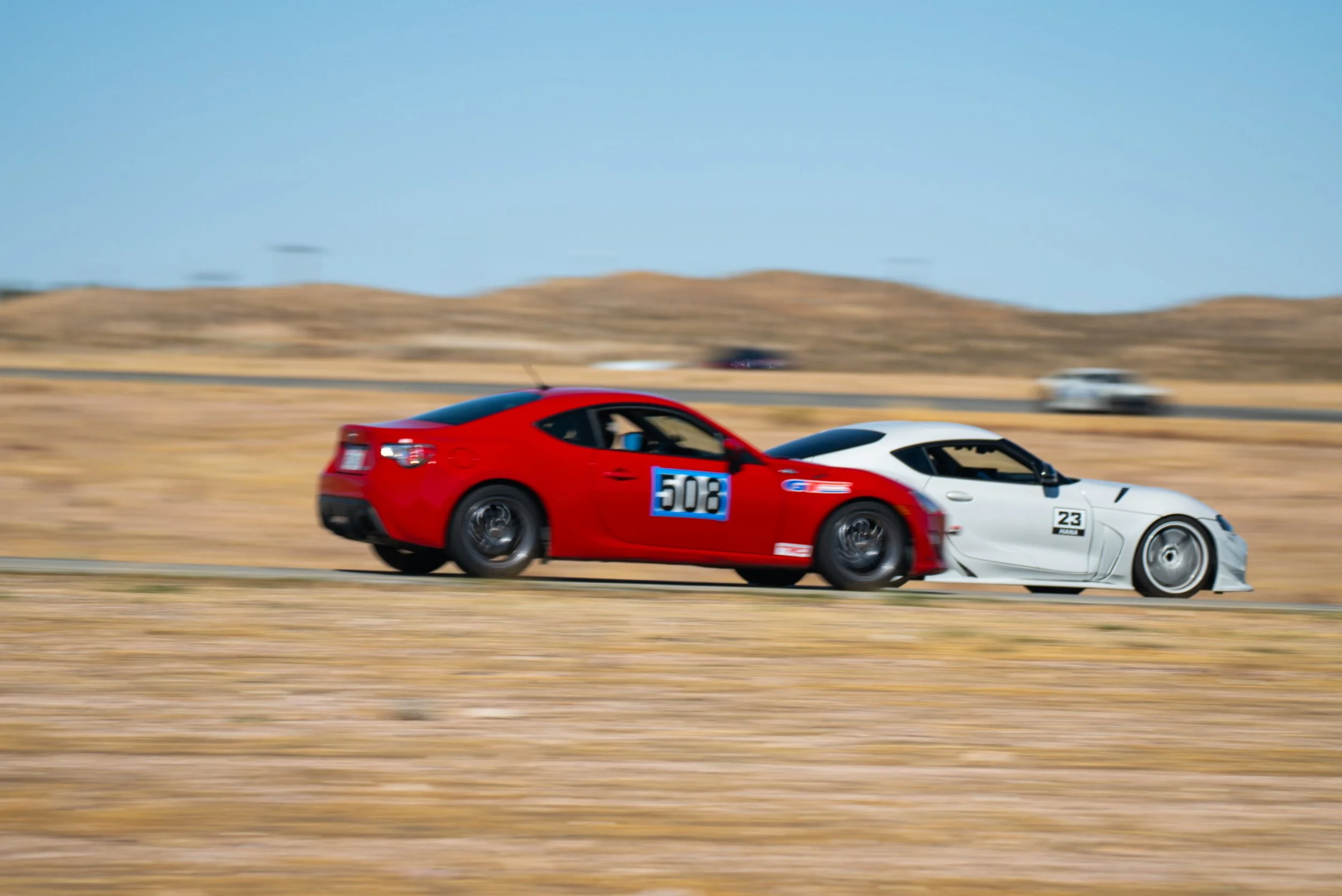
The FR-S sharing the circuit with another coupe during a track session.
The FA20 is not known for it’s reliability, but I had nothing but good luck with mine. Over the years, the FR-S saw regular track use, primarily at circuits throughout Southern California.
Streets of Willow, Willow Springs International Raceway, Buttonwillow, Chuckwalla, and Auto Club Speedway were among the tracks where I spent countless hours developing my driving.
When I relocated to Michigan, the frequency of track days slowed considerably, although I did manage to get the FR-S out to Gingerman Raceway in July 2023.
Throughout all of this, the car proved to be remarkably reliable.
Across more than 50 track days, I experienced only one significant mechanical issue: an ignition coil pack failure, a known weakness of the platform under sustained track conditions.
Aside from that, the FR-S never once left me stranded, whether on the road or traveling to and from a track event.
For a car that was regularly subjected to the demands of high-performance driving, I consider that an excellent record.
Of course, regular maintenance and preparation played a role. But the underlying platform proved itself to be both durable and dependable.
Moving On
By 2024, my priorities had changed.
With a growing family, I found myself wanting something that could offer more everyday practicality while still being capable of the occasional track day.
The FR-S had been a fantastic car for what I originally purchased it to do, but its limited passenger space and two-door layout were becoming less practical for my needs.
Earlier that spring, I had taken delivery of my new Toyota GR Corolla. I was hoping it would offer a combination of everyday practicality and track-day capability that better suited my changing needs.
With the GR Corolla now in the garage, I made the decision to sell the FR-S.
Before listing the car, I spent some time giving it the attention it deserved, including a thorough detailing and paint correction to bring the exterior back to its best possible condition.
After nearly six years of ownership, it was satisfying to see the car looking so good again.
Eventually, I found a buyer who I felt would appreciate the car and take good care of it.
On August 10, 2024, the FR-S officially went to its new home.
Saying good bye to the FRS as the new owner drives away
A Platform I'd Recommend to Anyone
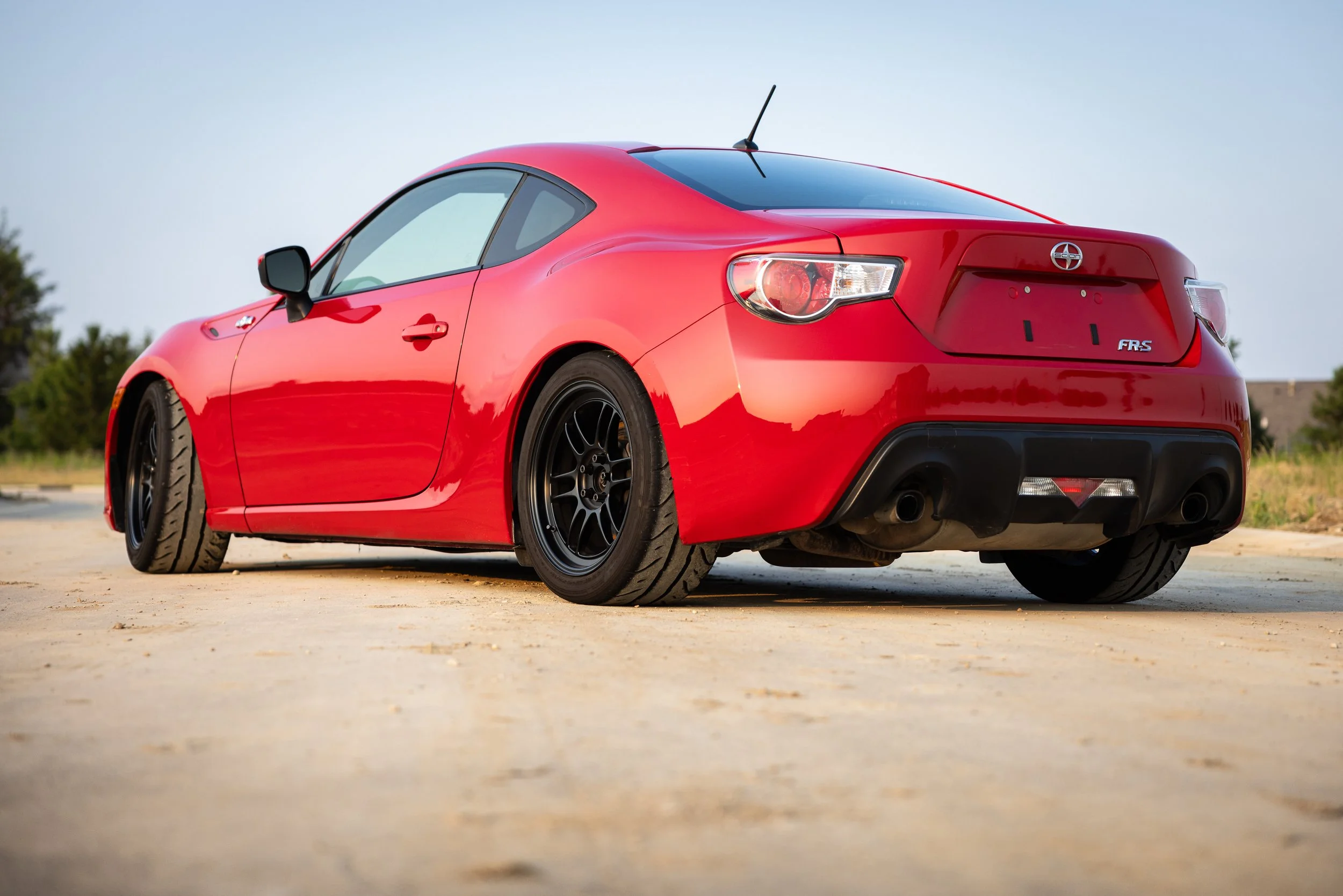
A rear three-quarter view of the FR-S, a car that always had more to teach me. - Image by PB Photo
If someone were to ask me what car I would recommend for getting started in track driving, the first-generation FR-S, BRZ, and Toyota 86 would still be near the top of my list.
It offers an excellent combination of affordability, practicality, predictable handling, and aftermarket support.
But perhaps its greatest strength is that it provides a platform a driver can continue growing with.
You don't need hundreds of horsepower to become a better driver. In many ways, having less power forces you to pay closer attention to the fundamentals.
And the FR-S is particularly good at rewarding those fundamentals.
I learned a tremendous amount behind the wheel of this car, and I never felt that I had exhausted what it could teach me.
That, to me, is the mark of a great driver's car.
The FR-S may be gone, but the lessons I learned driving it will carry forward into whatever I drive next.
For anyone interested in the setup I ran and the lap times I achieved over the years, I've included a summary below.
Final vehicle setup
| Component | Configuration |
|---|---|
| Suspension | Racecomp Engineering SS1 coilovers |
| Rear suspension | SPC adjustable lower control arms |
| Wheels |
Enkei RPF1, 17×8 Enkei RPF1, 17×9 |
| Tires |
Falken Azenis RT660 225/45R17 (17×8 setup) 245/40R17 (17×9 setup) |
| Brake pads | Various |
| Engine cooling | Setrab external oil cooler |
| Fuel system | E85 flex-fuel conversion |
| Ignition | Ignition Projects coil packs |
| Engine | Stock intake, headers, exhaust, and internals |
| Transmission | Stock |
PERSONAL BEST LAP TIMES
| Track / Configuration | Date | Personal Best |
|---|---|---|
| Willow Springs – Big Willow | Feb 27, 2021 | 1:42.367 |
| Auto Club Speedway – Infield | Apr 3, 2021 | 1:21.924 |
| Chuckwalla Valley Raceway – CW | May 2, 2021 | 2:09.385 |
| Buttonwillow Raceway | Jan 30, 2022 | 2:06.267 |
| Streets of Willow – CW | Feb 12, 2022 | 1:25.904 |
| Auto Club Speedway – Roval | Mar 14, 2022 | 1:59.197 |
| Streets of Willow – CCW | Mar 27, 2022 | 1:25.151 |