
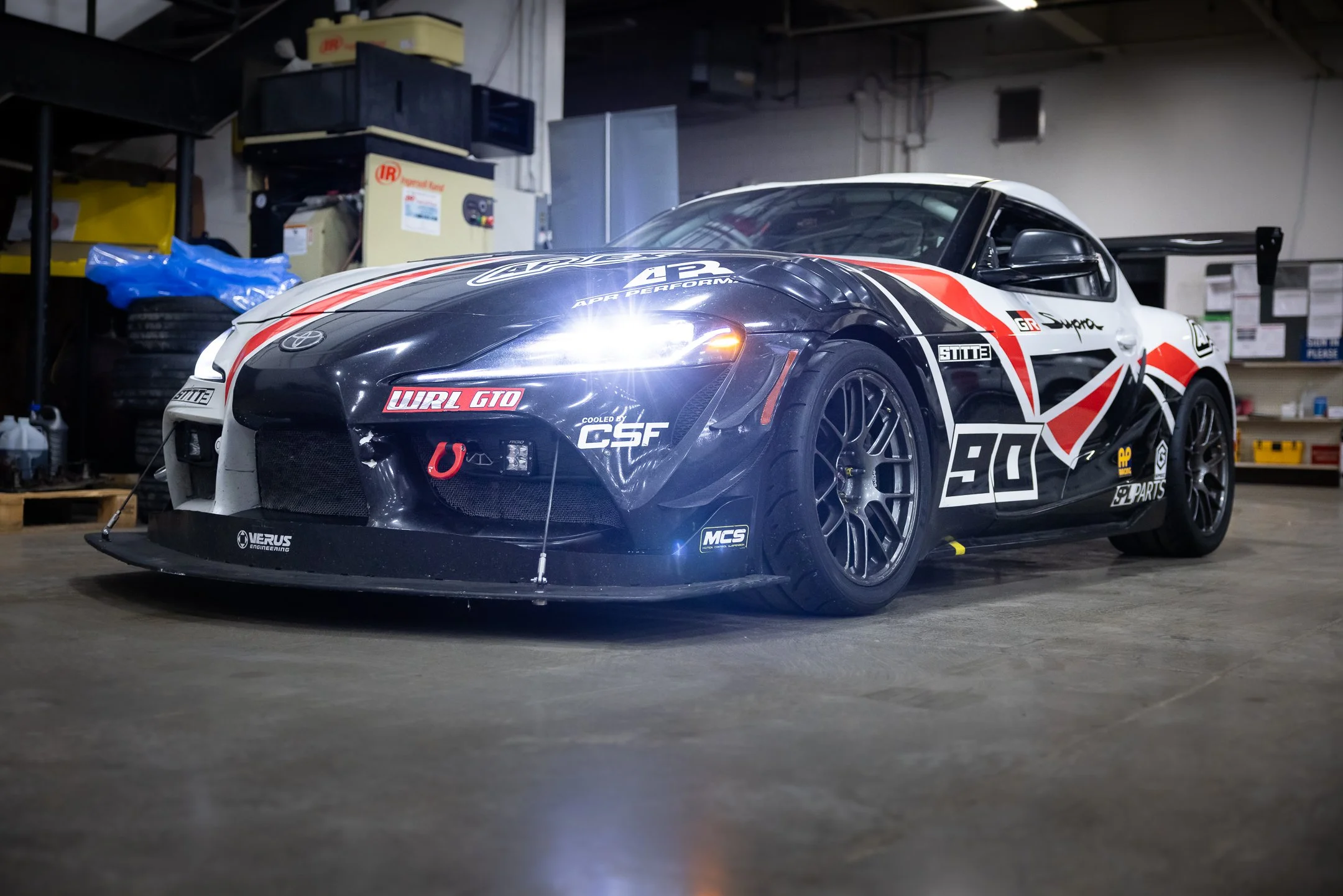
The number 90 A90 Supra in the workshop as Toyota R&D Racing prepares for its first race.
With the A90 Supra finally in our possession, it was time to get to work.
Although we had acquired an existing race car, there was still plenty to do before it would be ready for its first event with Toyota R&D Racing. Our immediate goal was to prepare the car for the upcoming NASA Great Lakes race weekend at NCM Motorsports Park in Kentucky, followed by Mid-Ohio later in the season.
And while the Supra was already a fairly well-developed race car, we weren't about to simply unload it from the trailer and head straight to the track.
Getting to Work
One of the first things we did was give the car a thorough nut-and-bolt check.
It sounds simple enough, but with any race car, particularly one that's new to the team, it's important to go through everything and understand what you're working with. We wanted to make sure things were properly secured, identify anything that needed attention, and generally familiarize ourselves with the car.
We also had a running list of tasks that needed to be completed before the first event. That list became the basis for our work nights.
Since Toyota R&D Racing was made up of Toyota engineers, technicians, and associates volunteering their time outside of their regular jobs, much of the preparation happened after hours. We'd get together in the evenings, review what needed to be done, and start working through the list.
I can't recall every individual task we completed during those first few weeks, but I remember the general routine. There was always something to inspect, adjust, repair, or improve.
For me, this was part of what made joining the team interesting. I had plenty of experience working on my own cars and preparing them for track days and time attack events, but this was an opportunity to be part of a larger team preparing a dedicated race car for competition.
And before we could get the Supra on track, we also needed to make sure it met NASA's class regulations.
Understanding NASA's Class Rules
For our first event, the Supra would be competing in several NASA categories, including Super Touring 3 (ST3), Time Trial 3 (TT3), and TREC1 in NASA's endurance racing series.
Unlike racing classes that primarily group cars by engine displacement or vehicle type, NASA's Super Touring and Time Trial classes use a power-to-weight-based classification system.
The general idea is to allow a wide variety of cars and modifications to compete against one another while controlling performance through the relationship between vehicle weight and engine output.
For ST3 and TT3, the nominal power-to-weight ratio was 10.0 pounds per horsepower.
But as with most racing regulations, there's more to it than simply dividing the car's weight by its peak horsepower.
NASA's rules also account for certain vehicle characteristics and modifications, including tire selection, transmission type, and other factors that can influence performance.
For our Supra, the classification paperwork listed the following:
| Classification item | Declared value |
|---|---|
| Vehicle | 2020 Toyota GR Supra |
| Competition class | ST3 / TT3 |
| Minimum competition weight, including driver | 3,340 lb |
| Maximum average horsepower | 355 hp |
| Weight adjustment factor | +0.10 |
| Tire adjustment factor | +1.00 |
| Transmission adjustment factor | −0.50 |
| Total modification factor | +0.60 |
With these adjustments, the Supra's declared specifications were intended to satisfy the ST3/TT3 requirements.
That meant we needed to establish the car's power output through an official dyno certification before competition.
A Trip to the Dyno
In March 2023, we brought the Supra to Rhino Dyno in Novi, Michigan, for its official power certification.
I was there with the team that day, and it was an opportunity to see where the car stood in terms of power output before heading into competition.
The A90 Supra was powered by the turbocharged 3.0-liter B58 inline-six, and although the engine was certainly capable of producing more power, we needed to ensure its output complied with NASA's regulations.
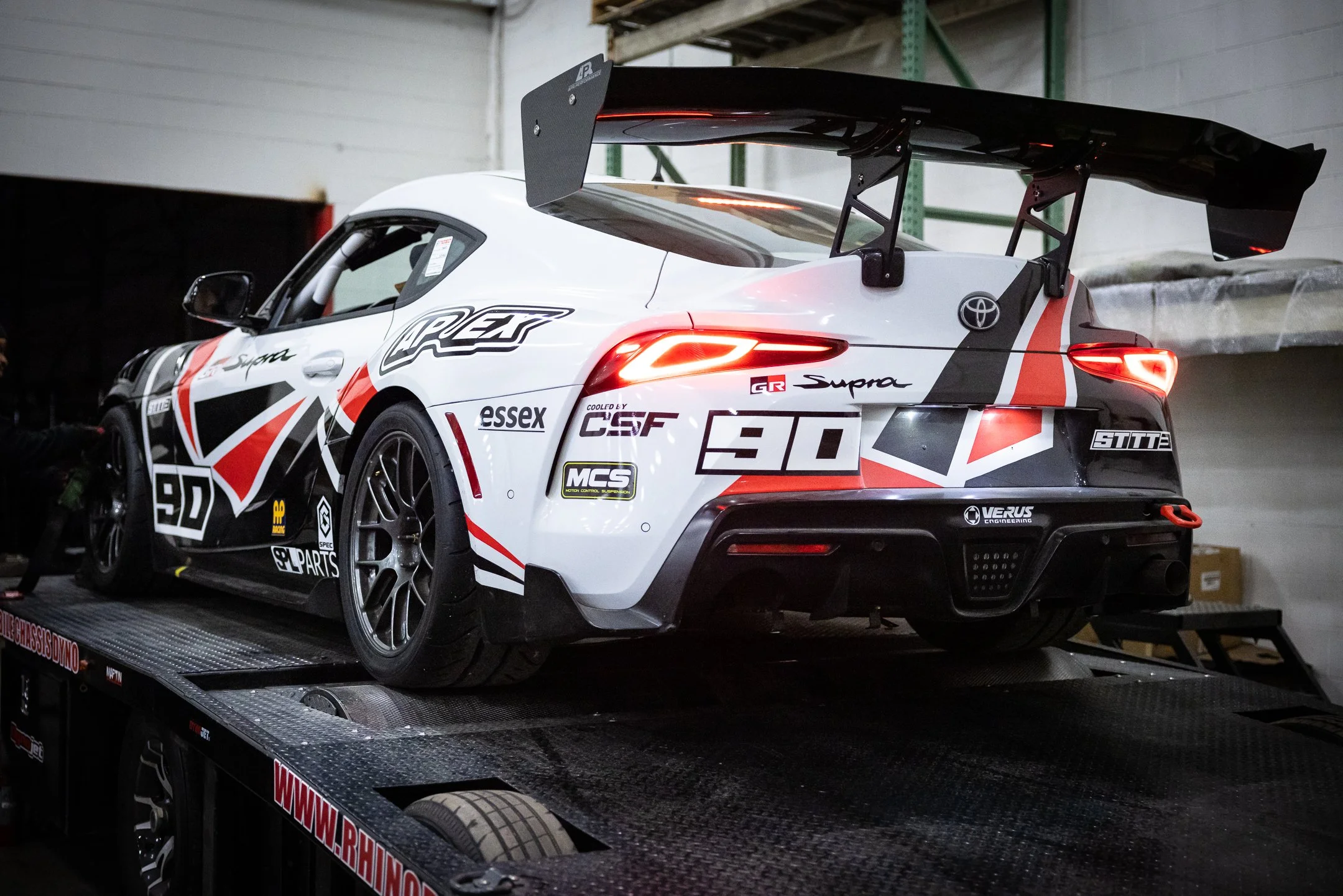
The Supra on the chassis dyno for its NASA power certification.
The official certification recorded the following results:
| Dyno measurement | Result |
|---|---|
| Maximum horsepower | 355 hp |
| Maximum torque | 454 lb-ft |
| Engine speed at maximum horsepower | 4,550 rpm |
| Dyno | Dynojet |
| Test date | March 19, 2023 |
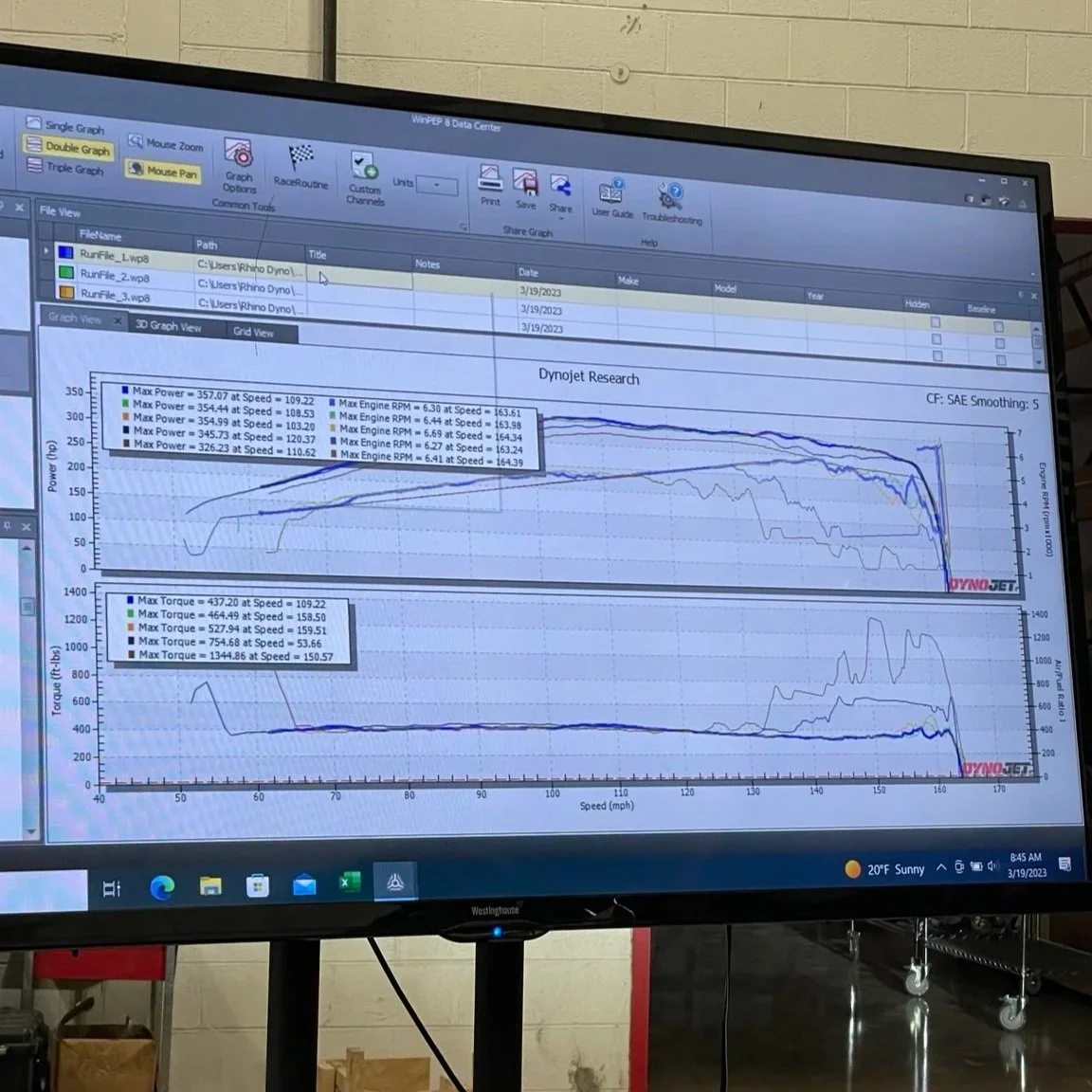
The Dynojet display showing the Supra’s horsepower and torque curves during certification testing.
Looking at the dyno graph, one of the interesting characteristics was how the horsepower curve flattened across much of the upper operating range.
Rather than continuing to climb with engine speed, the output remained relatively consistent.
It's also worth noting that NASA's classification uses a calculated average horsepower value rather than relying exclusively on peak output. The regulations specify how horsepower is evaluated across the engine's operating range, particularly for forced-induction engines.
That makes the shape of the power curve relevant to the classification process, not just the single highest horsepower number.
With the dyno testing complete, we had the documentation needed to support the Supra's declared power output for competition.
Final Preparations
Of course, horsepower certification was only one item on the list.
We continued working through the various tasks needed to get the car ready for its first race weekend. Between the inspections, mechanical preparation, and all the little details that come with getting a race car ready, there was plenty to keep everyone busy.
One thing I quickly appreciated was how much work went into preparing a car for competition, even one that was already built.
Unlike my previous track cars, where I was generally responsible for everything myself, this was a team effort. Everyone brought different experiences and skills, and the work was divided among the group.
With the initial preparation completed and the dyno certification in hand, the Supra was ready for its first outing with Toyota R&D Racing.
A Successful First Outing
The team headed to NCM Motorsports Park in Bowling Green, Kentucky, in March 2023 for the NASA Great Lakes race weekend.
The event would serve as both the Supra's initial shakedown and its first competitive outing with the team. The car was entered in three different categories: the three-hour TREC endurance race, Super Touring 3, and Time Trial 3.
And the results couldn't have been much better.
Toyota R&D Racing finished first in all three classes entered.
TREC1: First overall in the three-hour endurance race.
ST3: First in class, competing in a 31-car field and battling with cars from the faster ST2 class.
TT3: First in class and second fastest overall among 16 Time Trial competitors.
For a team that had spent the preceding weeks preparing the car after hours, it was a strong start to the season.
There would be plenty more work ahead, and the Supra would continue to evolve as we gained experience racing it. But for its first event under the Toyota R&D Racing banner, it was hard to ask for a better result.
Next up would be Mid-Ohio.