
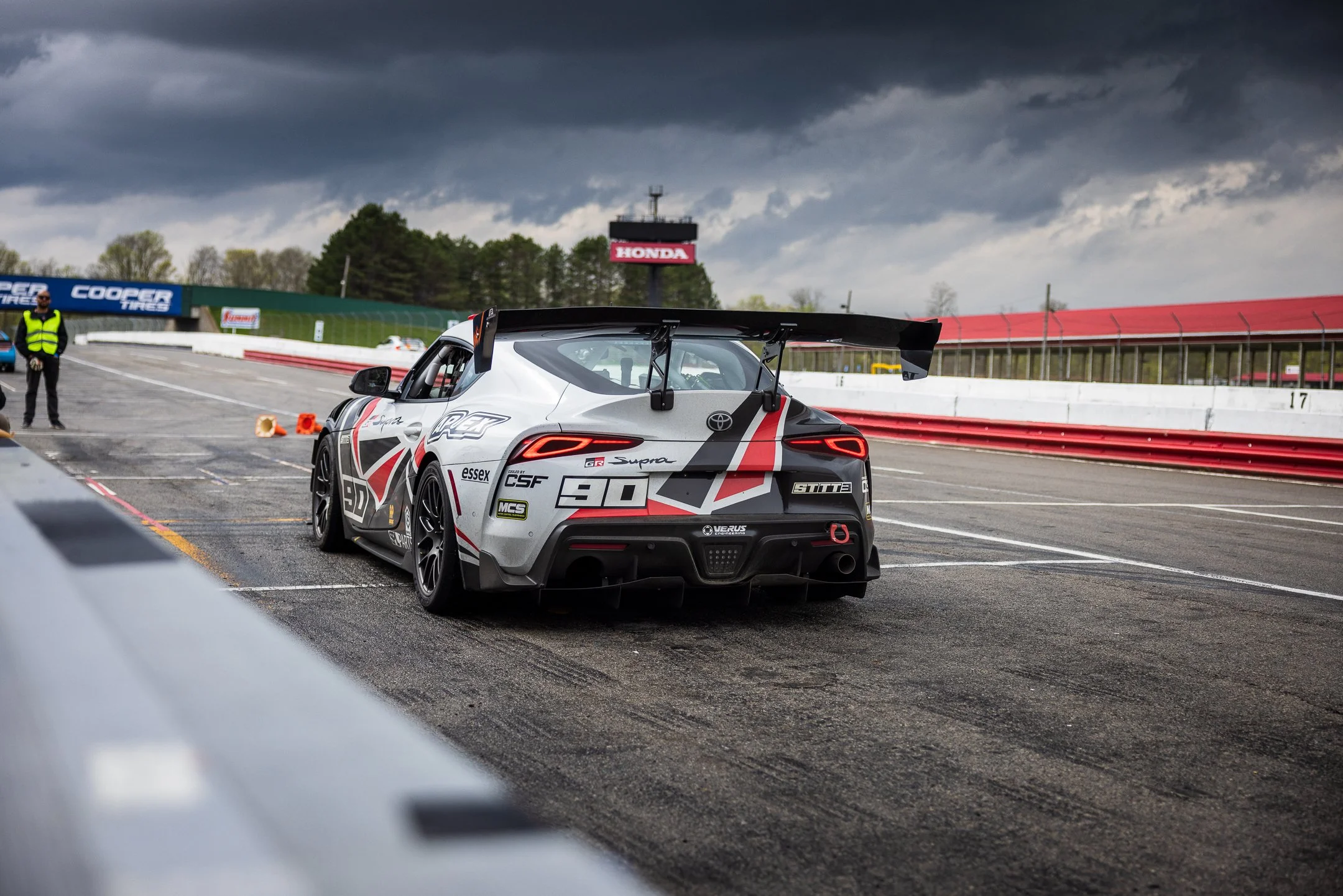
Our number 90 A90 Supra in the Mid-Ohio pit lane. - Image by PB Photo
With our first race weekend at NCM Motorsports Park behind us, it was time to head to our next event with Toyota R&D Racing. This time, we were heading to Mid-Ohio Sports Car Course for another weekend of racing with NASA Great Lakes.
Mid-Ohio is one of those tracks that has a reputation for being both technical and challenging. With its elevation changes, blind corners, and combination of fast and slow sections, it's a circuit that rewards precision and familiarity. It's also a track where getting comfortable behind the wheel can make a significant difference.
For this weekend, we had a fairly busy schedule planned for our A90 Supra. In addition to competing in NASA's four-hour TREC endurance race, we also entered the car in Time Trial (TT) and Super Touring (ST) competition.
The idea was straightforward: give our drivers as much seat time as possible.
Making the Most of the Weekend
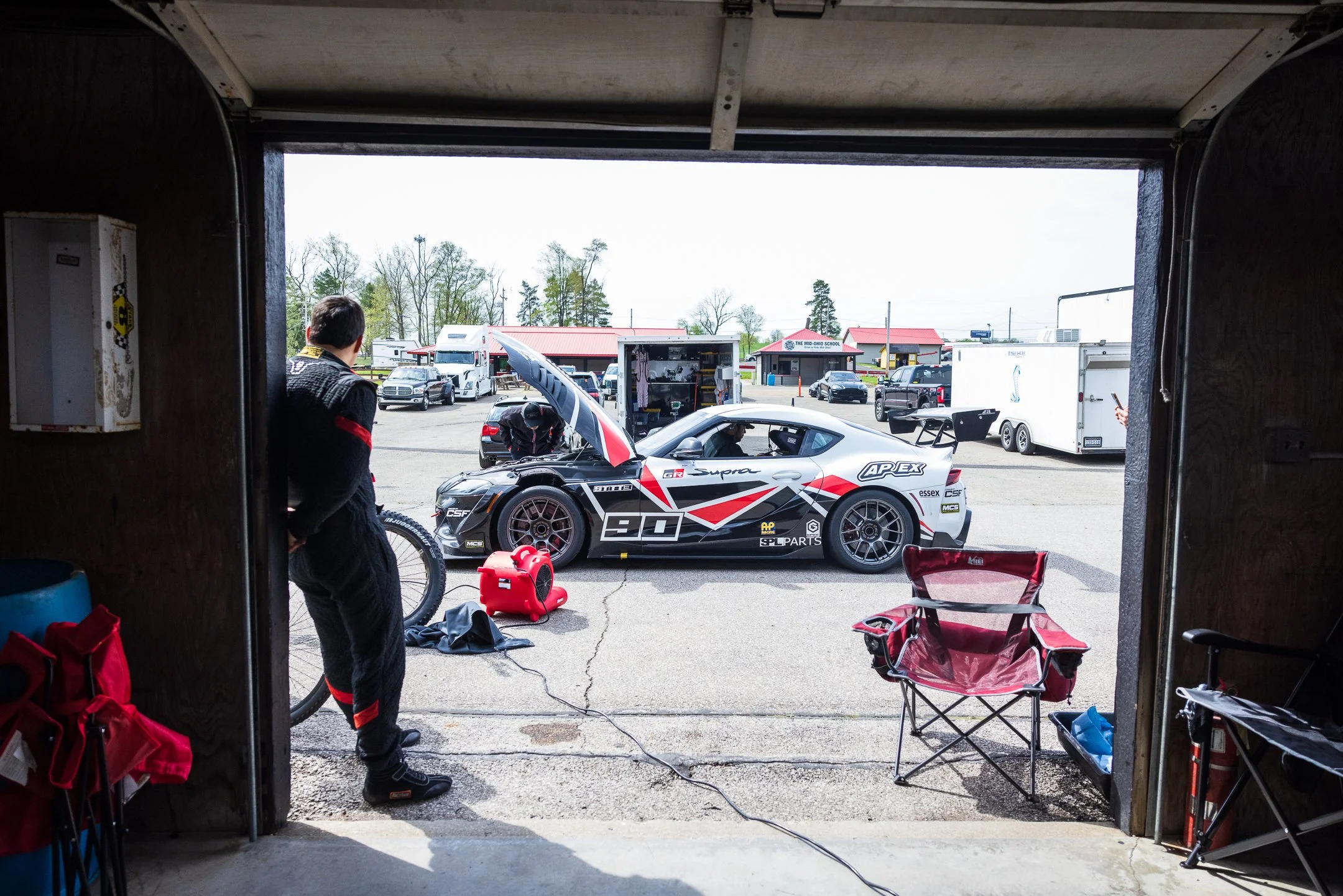
The Supra between sessions, viewed from our paddock garage. - Image by PB Photo
One of the challenges of endurance racing, particularly with a team sharing a single car, is finding enough opportunities for everyone to get comfortable behind the wheel.
Unlike a typical track day, where you might have several sessions throughout the day to experiment with different lines, braking points, and techniques, endurance racing requires drivers to share the available track time while also managing the demands of the race itself.
We wanted to make the most of our weekend at Mid-Ohio, so we decided to participate in multiple NASA competition formats.
Time Trial provided an opportunity for drivers to focus on lap times and improving their familiarity with the circuit. Super Touring offered another opportunity to gain experience in a wheel-to-wheel racing environment. And of course, the TREC endurance race would be our main event.
While each format had its own objectives, they all contributed toward the same larger goal: getting our drivers more comfortable and confident in the Supra.
There is only so much you can learn about a race car sitting in the paddock. At some point, you simply need laps.
Finding Time in the Pits
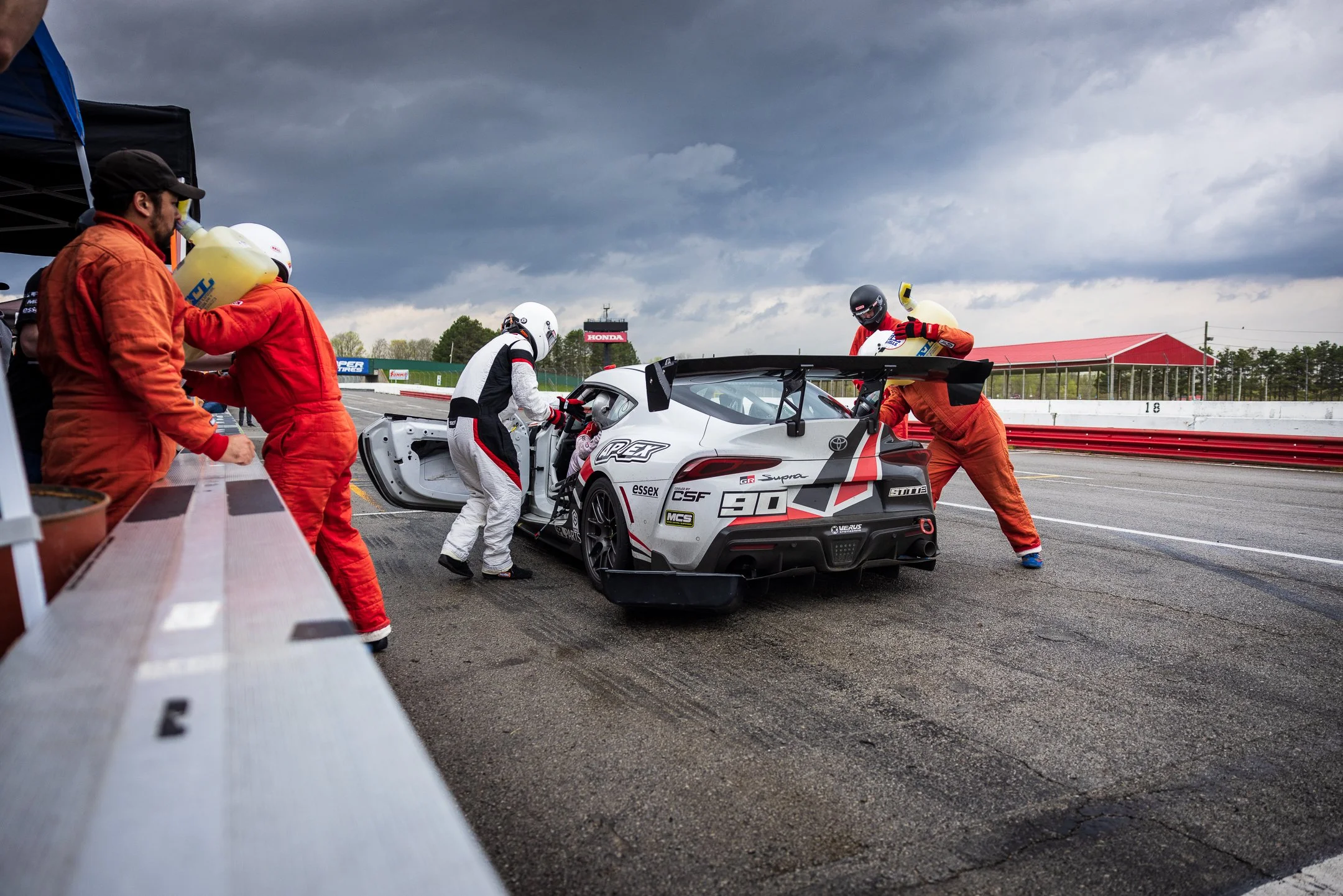
Putting our pit-stop practice to work with a driver change and refueling stop. - Image by PB Photo
While the drivers were focused on improving their performance on track, we were also putting considerable effort into another area where we believed we could gain an advantage: pit stops.
In endurance racing, outright lap time is only part of the equation.
You can have a fast car and capable drivers, but if you're losing unnecessary time every time you come into the pits, that advantage can disappear pretty quickly. A few extra seconds here and there might not seem like much, but over the course of a race, they can certainly add up.
We recognized early on that pit-stop execution was an area where we could potentially gain an advantage over our competitors.
So we practiced. A lot.
We worked on driver changes, refueling procedures, safety, and the overall sequence of operations. The objective wasn't simply to rush through everything as quickly as possible, but rather to develop a process that was efficient, consistent, and repeatable.
Everyone needed to know their responsibilities, and ideally, there would be very little hesitation once the car arrived in the pits.
We even made modifications to the Supra specifically with pit-stop efficiency in mind.
One of those modifications was adding a second dry-break refueling connection on the opposite side of the car. This allowed us to refuel from either side, depending on the track layout and the location of the pit wall.
Rather than having to move equipment around the car to reach a single refueling point, we could position ourselves on whichever side made the most sense for a particular circuit.
It was a relatively simple idea, but one that reflected how seriously we were approaching our pit-stop strategy.
After all, time saved in the pits is time you don't have to make up on track.
Keeping an Eye on the Supra
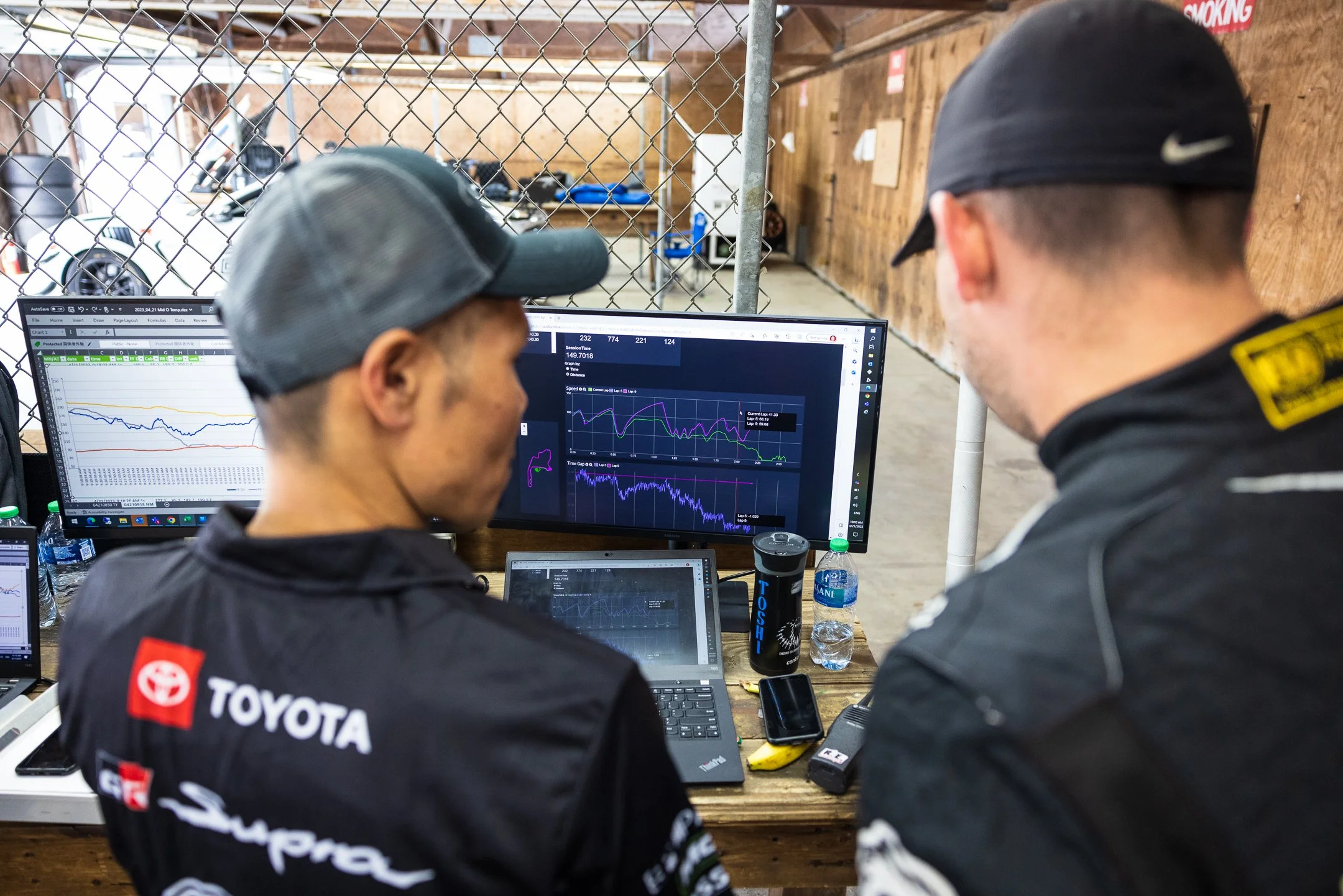
Reviewing the Supra’s telemetry and keeping an eye on operating temperatures. - Image by PB Photo
From a mechanical standpoint, the Supra performed quite well throughout the weekend.
One advantage we had was the ability to monitor some basic telemetry channels live from the pits. While the car was circulating on track, we could keep an eye on certain operating parameters and get an indication of how things were behaving.
One parameter that caught our attention was engine oil temperature.
The temperatures were running a little higher than any of us were particularly comfortable with, especially considering the relatively mild April weather at Mid-Ohio.
It wasn't necessarily an immediate problem, but it did raise some questions.
If we were already seeing elevated oil temperatures under relatively mild conditions, what would happen during a hot summer race weekend? Or during longer periods of sustained running?
Engine oil temperature is particularly important in endurance racing, where the powertrain is subjected to prolonged periods of high load. Managing those temperatures is critical to maintaining both performance and reliability.
Fortunately, the temperatures didn't appear to cause any immediate issues, and the Supra continued running without any significant mechanical problems.
We didn't find ourselves having to tear into the car or perform any major repairs throughout the weekend, which was certainly encouraging.
For a race car that we were still getting familiar with as a team, reliability was every bit as important as outright speed.
The Four-Hour TREC Enduro
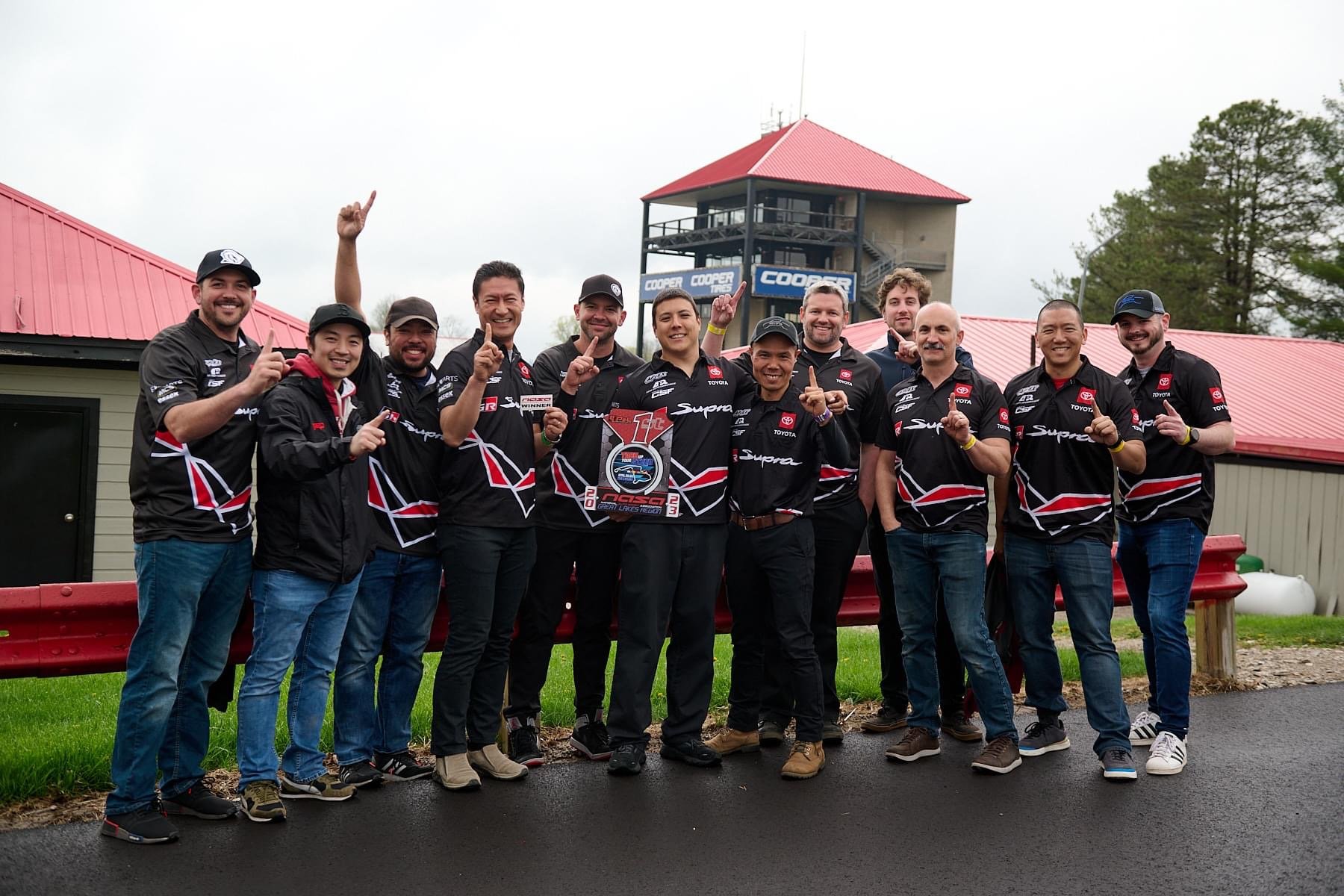
Toyota R&D Racing celebrating an overall victory in the four-hour TREC enduro.
The main event of the weekend was NASA's four-hour TREC endurance race.
This was where all the preparation came together. The drivers needed to manage their stints, the car needed to remain reliable, and the crew needed to execute the pit stops we'd spent so much time practicing.
Unlike a sprint race, where outright pace can often be the deciding factor, endurance racing introduces several additional variables.
Traffic management, consistency, fuel strategy, pit-stop execution, and mechanical reliability all play a role in the final outcome.
A fast lap is certainly nice, but it's the accumulation of laps that ultimately matters.
Our Supra, competing as car #90 under the T-RAD Toyota R&D Racing entry, completed 102 laps of Mid-Ohio's 2.25-mile circuit.
And when the results were finalized, we had finished first overall, eight laps ahead of the second-place team.
Not a bad result for our weekend!
Our fastest lap was a 1:33.595, but what mattered more was that we were able to put together a consistent race and keep the car running.
The preparation we'd put into our pit-stop procedures, along with the car's reliability and the drivers' efforts on track, had all contributed to a successful weekend.
We couldn't have asked for much more than that.
More Than Just a Race Result
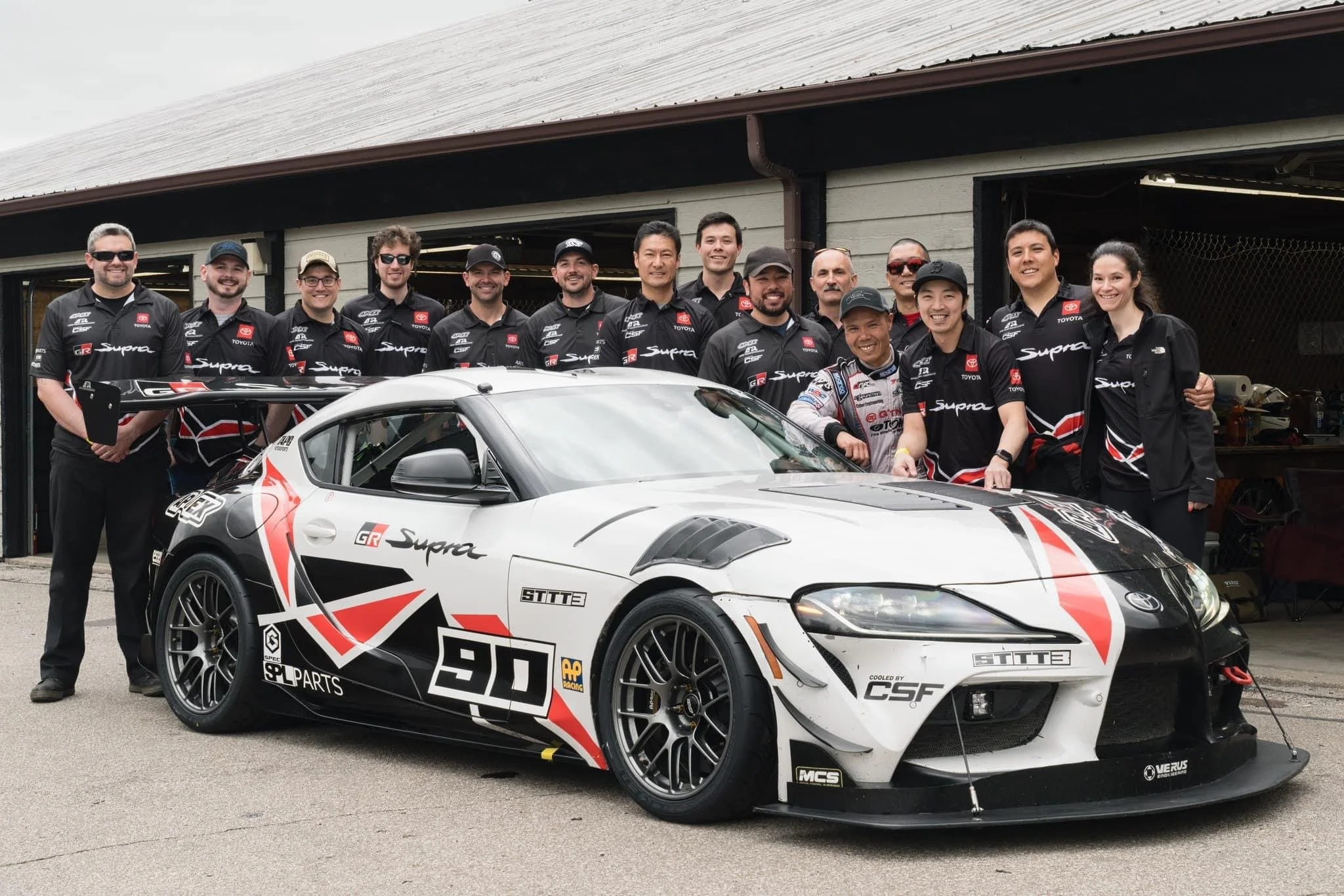
The team and our A90 Supra at Mid-Ohio—a weekend of learning and an overall win.
Coming away from Mid-Ohio with an overall endurance race victory was certainly something to be happy about.
But beyond the finishing position, the weekend was another opportunity for us to continue developing as a team.
Our drivers had additional seat time through TT and ST competition, allowing them to become more familiar with both the car and the circuit.
We had more opportunities to practice and execute our pit-stop procedures under actual race conditions.
And from a technical standpoint, we continued learning about the Supra, including identifying areas such as oil temperature management that deserved further attention.
Perhaps most importantly, the car had proven itself to be reliable throughout the weekend.
There's always something that can be improved, whether it's the car, the drivers, or the team operating behind the scenes. That's part of what makes motorsports so interesting.
For us, Mid-Ohio was another step forward in learning how to operate as an endurance racing team.
And bringing home an overall victory certainly didn't hurt, either.
Next up, we’ll prepare for our WRL debut at VIR!