
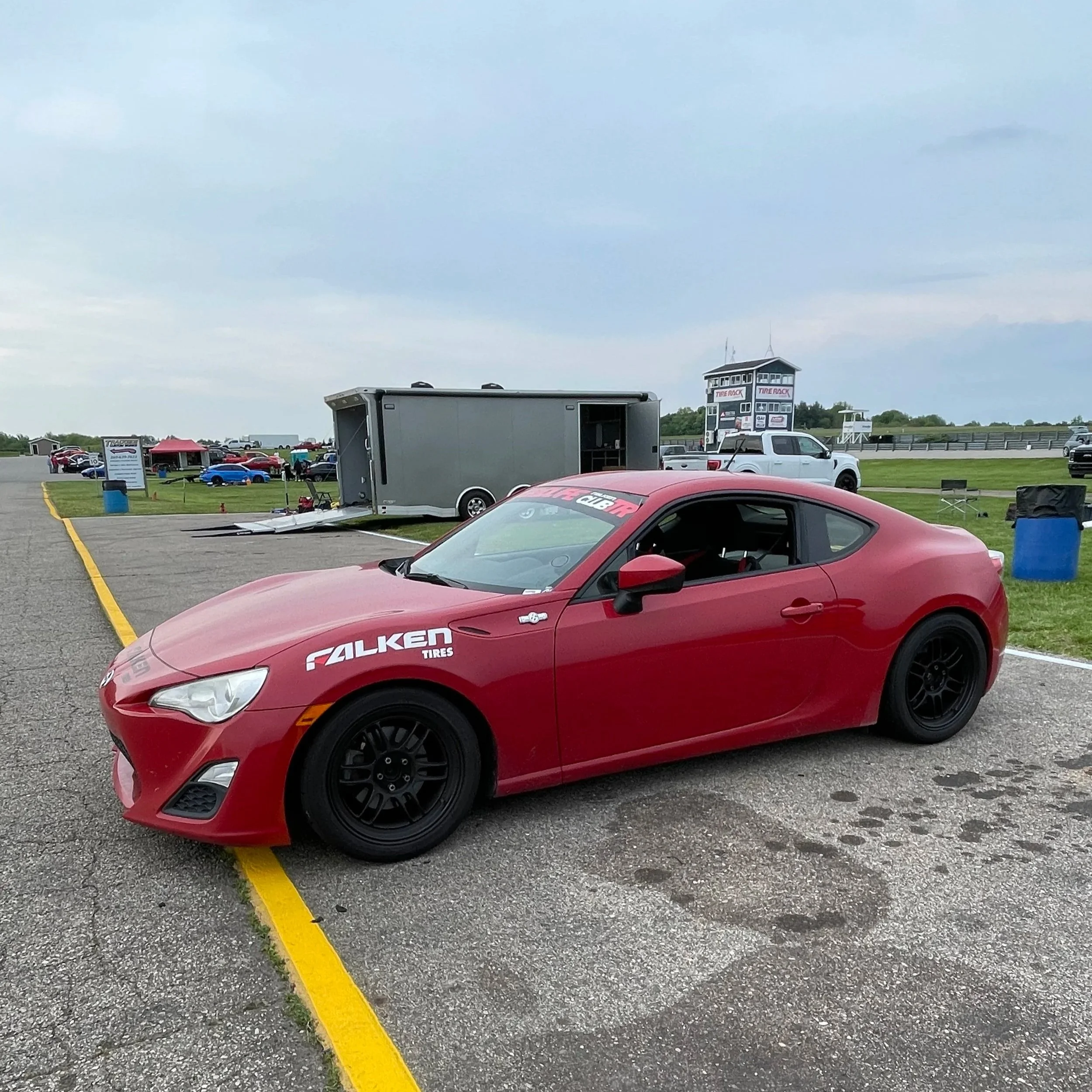
It had been a little over a year since my last track day. By July 2023, I was ready to get back behind the wheel of my FR-S, and an SCCA Track Night in America event at Gingerman Raceway seemed like the perfect opportunity.
One of the things I’ve always liked about SCCA’s Track Night in America program is the schedule. Unlike traditional track days that often require arriving first thing in the morning, these events start later in the afternoon.
Living in Saline, Michigan, Gingerman was roughly a two-hour drive away. Having an afternoon event meant I didn’t have to wake up at some ridiculous hour just to get to the track on time.
And as it turned out, the weather was great that day. Despite being the middle of July, it wasn’t unbearably hot, making for a pleasant afternoon at the circuit.
This would also be my first time driving Gingerman, which gave me something else to look forward to: learning a new track.
I wasn’t heading out there to set lap records or drive at ten-tenths. It had been a while, the circuit was unfamiliar, and more than anything, I just wanted to enjoy driving again.
Learning a Track Before Arriving
One of the things I enjoy about driving a new circuit is the preparation that goes into it.
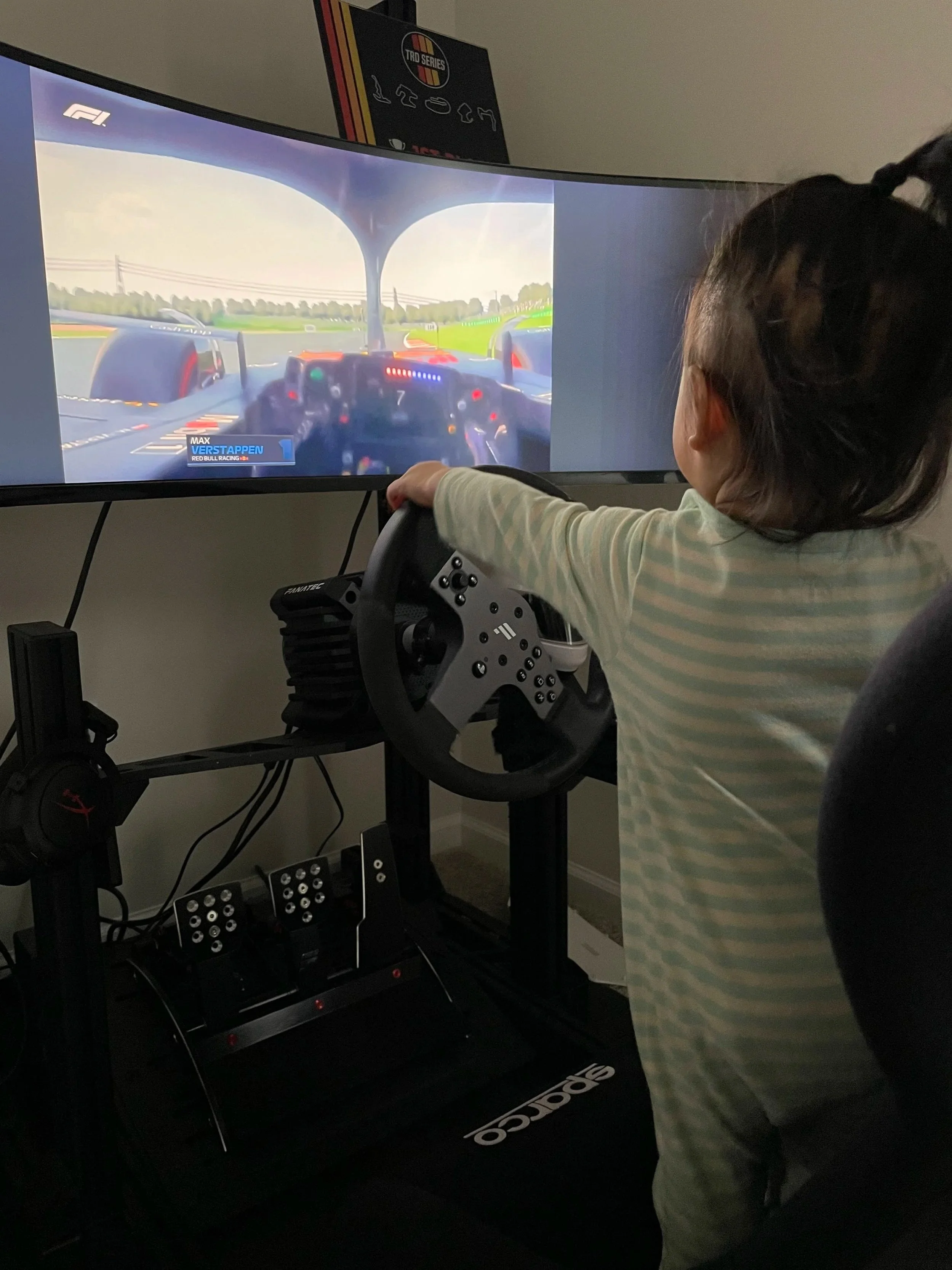
Whenever possible, I like to study the track before ever setting foot on the property. That means looking at track maps, watching onboard videos, and spending time driving the circuit on my simulator.
Simulator tools have become invaluable for this. One of the most fundamental things they teach you is also one of the simplest: which way the track goes.
That might sound obvious, but there’s a tremendous advantage in arriving at a circuit already knowing the layout. Instead of spending your first few sessions memorizing which corner comes next, you’ve already done that work.
Now you can focus on the things that are much harder to replicate virtually. How much grip is available? How does the car respond to the elevation changes? What does the corner actually feel like? Where are the braking references, and how does the car behave as you begin to approach its limits?
Having that familiarity doesn’t mean you’ve mastered the circuit. Far from it. But it allows you to spend more of your valuable track time learning the things that can only be experienced behind the wheel.
I’ve written previously about building my own sim racing rig, and this is exactly the kind of application that makes it such a useful tool for driver development.
Finding the Important Corners
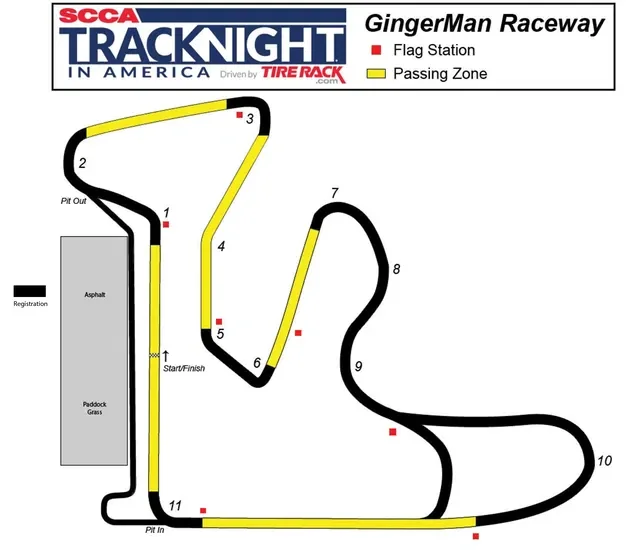
When studying a track map, I’m not just trying to memorize the layout. I’m also looking for opportunities.
The obvious places to start are corners leading onto long straights. Getting a good exit out of these corners is important because any speed advantage you carry onto the straight continues to pay dividends well beyond the corner itself.
Then I look for the difficult corners. The ones that appear particularly technical, intimidating, or perhaps have unusual characteristics. These are often places where drivers struggle, and potentially where there’s time to be gained. If I can become comfortable and consistent through those sections, there may be an advantage.
Finally, I look at how the corners connect.
Not every corner deserves the same priority. Sometimes a corner is worth sacrificing to better position the car for what comes next. Depending on the situation, that might mean prioritizing entry speed, using the brakes to help rotate the car, or taking a different line through a sequence.
Of course, this is all preliminary analysis. Every circuit is different, and what works depends on the car, the conditions, and how the corners connect. But I enjoy the process of developing ideas beforehand and then seeing how they hold up once I’m actually driving.
Getting to Know Gingerman Raceway
Gingerman Raceway is located just outside South Haven, Michigan. It’s a technical road course with a good mixture of slower corners, faster flowing sections, and elevation changes that add another dimension to the driving experience.
It’s also a circuit where looking at a track map doesn’t necessarily tell the whole story. Some corners are more complex than they initially appear, particularly when you begin considering how the elevation changes affect the car.
A few sections stood out to me.
Turns 1–3: Getting Settled In
Turn 1 comes after a small rise in the circuit, which is something worth keeping in mind when approaching the corner.
As the car passes over the crest, the changing vertical load can affect the available grip. It’s not necessarily a place where I’d want to be overly aggressive with the brakes, especially while learning the circuit.
Sometimes getting the car settled and positioned correctly is more valuable than trying to squeeze out every last bit of braking distance.
Turn 3 presents a different challenge. It’s a heavier braking zone leading into what is effectively a double-apex corner.
With corners like this, I’m generally thinking about how the first part of the corner influences the second. Rather than focusing entirely on the initial apex, I want to understand where the car needs to be positioned to negotiate the rest of the turn.
It’s another example of how the fastest-looking line through the first part of a corner isn’t always the best line through the entire section.
Turns 5–6: Familiar Challenges
Turns 5 and 6 were particularly interesting because of the downhill section. It reminded me somewhat of Turn 3 at Streets of Willow, running clockwise.
It’s always interesting when a new circuit presents something familiar from another track.
The challenge with a sequence like this is understanding how the corners work together. Instead of treating them as two separate turns, I’m thinking about how my approach to Turn 5 affects my position and trajectory through Turn 6.
One possibility is to take an earlier apex through Turn 5, creating a more favorable approach to Turn 6 and something resembling a V-shaped line through the sequence.
The downhill nature of the section adds another consideration, particularly when managing the car’s balance as it transitions between corners.
It’s the kind of section where I enjoy experimenting with different approaches and seeing how they affect the overall flow.
Turns 7–9: Finding the Rhythm Again
The faster sequence through Turns 7–9 was one of the highlights for me.
After more than a year away from the track, one of the things I had been looking forward to most was simply experiencing the sensation of driving at speed again.
And fortunately, it didn’t take long to feel comfortable behind the wheel.
There’s something particularly enjoyable about carrying speed through a series of flowing corners. It requires trust in the car, smooth inputs, and an understanding of where you want the car to be as the sequence develops.
Through a section like this, I’m thinking about being patient with turn-in and avoiding the temptation to commit too early. Sometimes staying toward the outside longer than initially feels natural can help establish a better trajectory through the following corners.
But beyond the technical considerations, it was simply enjoyable to feel that rhythm again.
I wasn’t pushing the FR-S to its absolute limits. There was no reason to. This was a new circuit, my first track day in a while, and an opportunity to get reacquainted with driving.
Sometimes that’s more than enough.
Turn 10B: Respecting the Downhill
Turn 10B was another interesting corner because of the way the track falls away.
It reminded me a little of the Bowl at Streets of Willow, although the two corners present quite different challenges.
At the Bowl, the banking provides additional support through the corner, allowing the car to carry more speed than you might initially expect.
At Gingerman’s Turn 10B, the downhill geometry works differently. As the road falls away, changes in vertical loading can reduce the available grip, particularly through the transition.
It’s something to keep in mind when choosing a braking point. Carry too much speed into the corner, and you may find yourself running out of grip when you need it most.
This is one of those places where I’d rather make sure the car is properly slowed and positioned than discover I’ve been too ambitious with my entry speed.
Getting this section right is also important because of how it connects to the following straight and Turn 11.
Turn 11: A Familiar Problem
Turn 11 is a more traditional 90-degree right-hander, but that doesn’t necessarily make it any less interesting.
With a corner like this, I’m generally thinking about the exit. A later apex may allow me to get the car pointed in the right direction sooner, reducing the steering demand as I begin accelerating.
It’s a familiar consideration in circuit driving: sometimes sacrificing a little entry speed can produce a better exit.
The challenge is determining how much of that compromise is worthwhile and understanding what the rest of the circuit demands.
Back Behind the Wheel
As much as I enjoy studying circuits, analyzing corners, and thinking about driving techniques, this particular track day wasn’t about chasing the last few tenths of a second.
It was about getting back out there.
Gingerman gave me a new circuit to learn, some interesting corners to figure out, and an opportunity to put my preparation into practice.
And while there’s always something to work on and another technique to improve, not every track day needs to be about finding more speed.
Sometimes, it’s simply about enjoying the drive.
After more than a year away, that was exactly what I needed.